Shrub Pruning in North Ogden, UT | Darrell’s Tree Service
If you’ve ever pulled into a well-kept commercial property in North Ogden—an HOA entrance, a church parking lot, a small office building—you can feel the difference instantly. The place looks cared for. Safe. Intentional. And a lot of that “put-together” feeling comes from shrubs that are pruned correctly (not hacked back, not overgrown, not blocking walkways or signs).
If you’re searching for shrub pruning in North Ogden, you’re probably dealing with one of two situations:
- Your shrubs are getting shaggy, uneven, or too large for the space.
- Someone has been “trimming” them for years, and now they’re thin inside, ugly on top, or constantly sprouting messy growth.
Let’s fix that. Below, I’ll walk you through pruning vs. trimming, the best times to prune in Northern Utah, and how proper pruning improves blooms, structure, and long-term plant health.
Pruning vs. trimming (and why it matters in Northern Utah)
People use the words interchangeably, but they’re not the same.
- Trimming is mostly about appearance—shearing the outside to keep things looking neat.
- Pruning is about plant health and structure—selectively removing branches to shape growth, reduce risk, and encourage better flowering.
Here’s the problem: a lot of shrubs around North Ogden get “trimmed” with hedge shears over and over. It looks fine for a season… until it doesn’t. Over time, constant shearing creates a dense outer shell and a dead, twiggy interior. You end up with shrubs that:
- Lose blooms
- Get thin at the base
- Grow too wide into sidewalks and drive lanes
- Become harder to maintain (and more expensive to fix)
Shrub pruning is the reset button. Done correctly, it improves airflow, reduces disease pressure, and helps shrubs hold a clean shape without fighting you every month.
Why shrub pruning is a big deal for commercial properties
If you manage a commercial site—HOA, church, retail center, office park, or city property—shrubs aren’t just “landscaping.” They’re part of your safety and liability picture.
Proper shrub pruning helps with:
- Visibility: Keep signs, entrances, and corners clear.
- Access: Prevent shrubs from narrowing sidewalks, blocking ramps, or crowding parking stalls.
- Security: Overgrown shrubs create hiding spots and reduce sightlines.
- Snow season performance: In Northern Utah, heavy snow can splay shrubs outward or snap weak limbs—good structure matters.
- Curb appeal: A clean, maintained landscape signals professionalism and care.
And if you’re a property manager juggling multiple vendors, the goal is simple: you want it handled safely, consistently, and without drama.

Common shrubs in North Ogden (and what they need)
North Ogden landscapes often include hardy shrubs that can handle our hot summers, cold winters, and occasional wind events. Some common ones we see across Northern Utah include:
- Lilac
- Spirea
- Barberry
- Juniper
- Boxwood
- Burning bush
- Hydrangea (in protected areas)
- Rose of Sharon
Each shrub has its own “rules,” especially when it comes to blooming. The biggest mistake I see is pruning at the wrong time and accidentally cutting off flower buds.
When to prune shrubs in North Ogden, UT
Timing matters here because our seasons swing hard—freeze/thaw cycles, spring wind, summer heat, and early fall cold snaps.
Late winter to early spring (often best for structure)
For many shrubs, late winter or early spring is a great time for structural pruning because:
- You can see the branch framework clearly.
- The plant is still dormant, so stress is lower.
- New growth will fill in as temperatures warm.
This is often the “clean-up and shape” season for many non-flowering shrubs.
Right after flowering (best for spring bloomers)
If a shrub blooms in spring (like lilac or some spireas), it typically sets next year’s buds shortly after blooming. That means:
- Prune right after it flowers if you want blooms next year.
- If you prune late summer or fall, you may remove next season’s flowers.
Summer touch-ups (light, careful)
Summer is fine for light maintenance—removing dead branches, correcting a safety issue, or reducing minor overgrowth. But heavy pruning during peak heat can stress shrubs, especially if irrigation is inconsistent.
Fall pruning (usually not ideal)
In Northern Utah, fall pruning can trigger tender new growth that gets damaged by early freezes. There are exceptions, but in general, we’re cautious about major fall cuts.
If you’re not sure what you have or when it should be pruned, that’s normal. It’s one of the most common reasons people call us for shrub pruning in North Ogden.
The “clean cut” difference: what good pruning actually looks like
Good shrub pruning isn’t random. It’s intentional.
Here’s what we aim for:
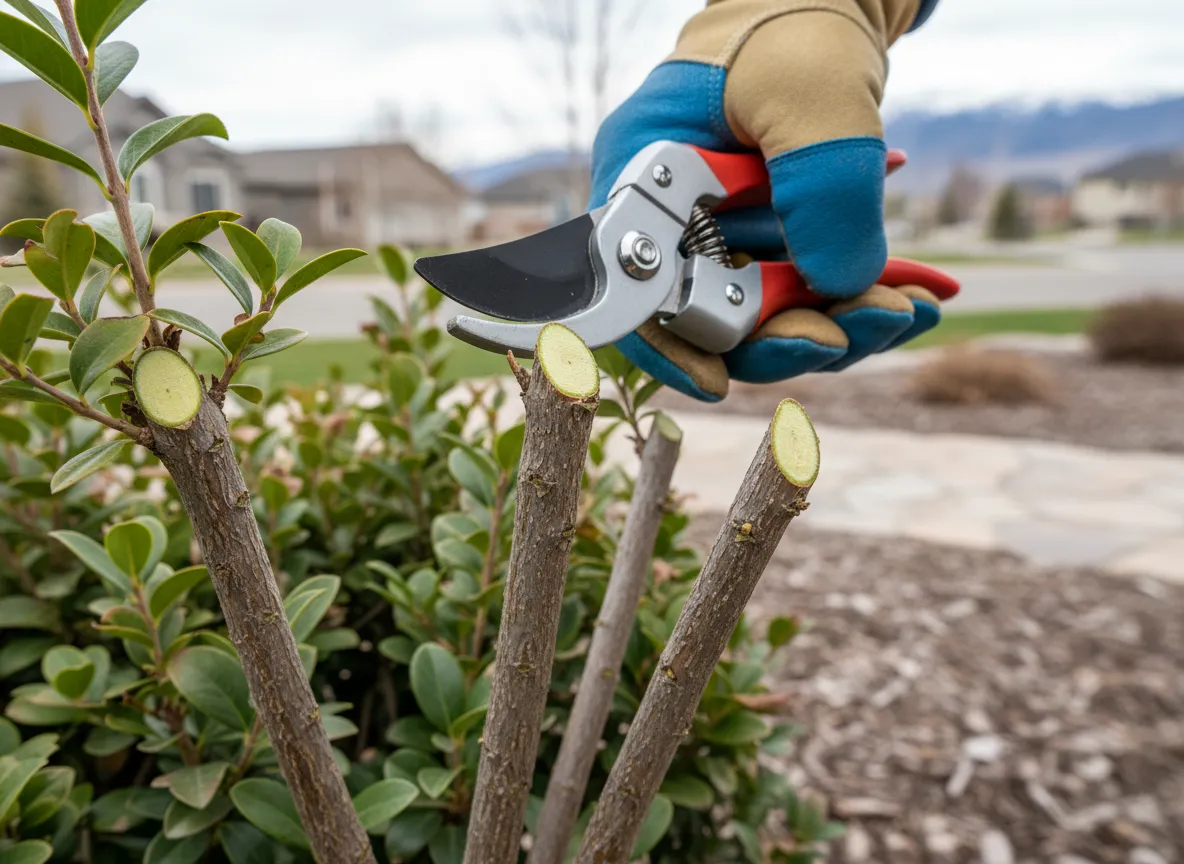
- Clean cuts (sharp tools, correct angles)
- Selective thinning (removing certain stems back to a branch collar)
- Balanced shape (not top-heavy, not hollowed out)
- Healthy airflow (reduces fungal issues)
- Natural form (most shrubs look better when they don’t resemble a perfect cube)
When you see a close-up of clean pruning cuts on a shrub using bypass pruners, that’s not just “pretty work.” Clean cuts heal better, reduce tearing, and lower the chance of disease entering the plant.
How pruning improves blooms and structure
If your shrubs used to bloom more than they do now, pruning is often the missing piece.
1) More blooms (because you’re not cutting off the buds)
Correct timing and selective cuts protect the flowering wood. For many shrubs, the goal is to remove older stems and encourage new, productive growth.
2) Stronger structure (especially important with snow)
North Ogden winters can load shrubs with wet snow. Shrubs that are too dense on the outside or weak at the base tend to splay open or break.
Pruning helps shrubs develop stronger branch spacing and a more stable shape.
3) Better long-term appearance
A shrub that’s sheared constantly often looks “neat” for a week and messy for the next five. A properly pruned shrub holds its shape longer and grows in a healthier pattern.
Signs your shrubs need pruning (commercial + residential)
If you’re on the fence, here are clear signs it’s time:
- Shrubs are blocking walkways, entrances, or signage
- Branches are rubbing against buildings, fences, or windows
- The base is thin and woody, with most leaves on the outside
- You see dead branches inside the canopy
- Shrubs are growing into parking areas or drive lanes
- You’re getting fewer blooms each year
- You’ve had storm or snow damage
For businesses and HOAs, I’d add one more: if you’re getting resident or tenant complaints about visibility, access, or “it looks unkempt,” pruning is usually the fastest fix.
Safety notes: when shrub pruning becomes a job for pros
Some shrub pruning is straightforward. But it becomes a safety issue when:
- Shrubs are tangled into fencing or near utility lines
- You’re working on slopes, retaining walls, or tight commercial corners
- You’re using ladders or power tools near pedestrian traffic
- Shrubs are mixed with small trees (common in older landscapes)
Darrell’s Tree Service is fully licensed and insured, and we approach every job with a safety-first mindset. That matters on commercial sites where you can’t afford accidents, property damage, or a crew that leaves a mess behind.
If you’re also dealing with trees on-site, it can be helpful to bundle services. For example, if shrubs are overgrown because trees have shaded them out, a tree trimming plan can make a big difference.
Learn more about our tree trimming options here: https://darrellstreeservices.com/tree-trimming/
And if shrubs have grown into a tree line or you’re clearing an area for visibility, our land clearing services can help.
Land clearing details: https://darrellstreeservices.com/land-clearing/
What to expect from a professional shrub pruning visit
Whether you’re managing one property or several across the Wasatch Front, here’s what a solid shrub pruning service should include:
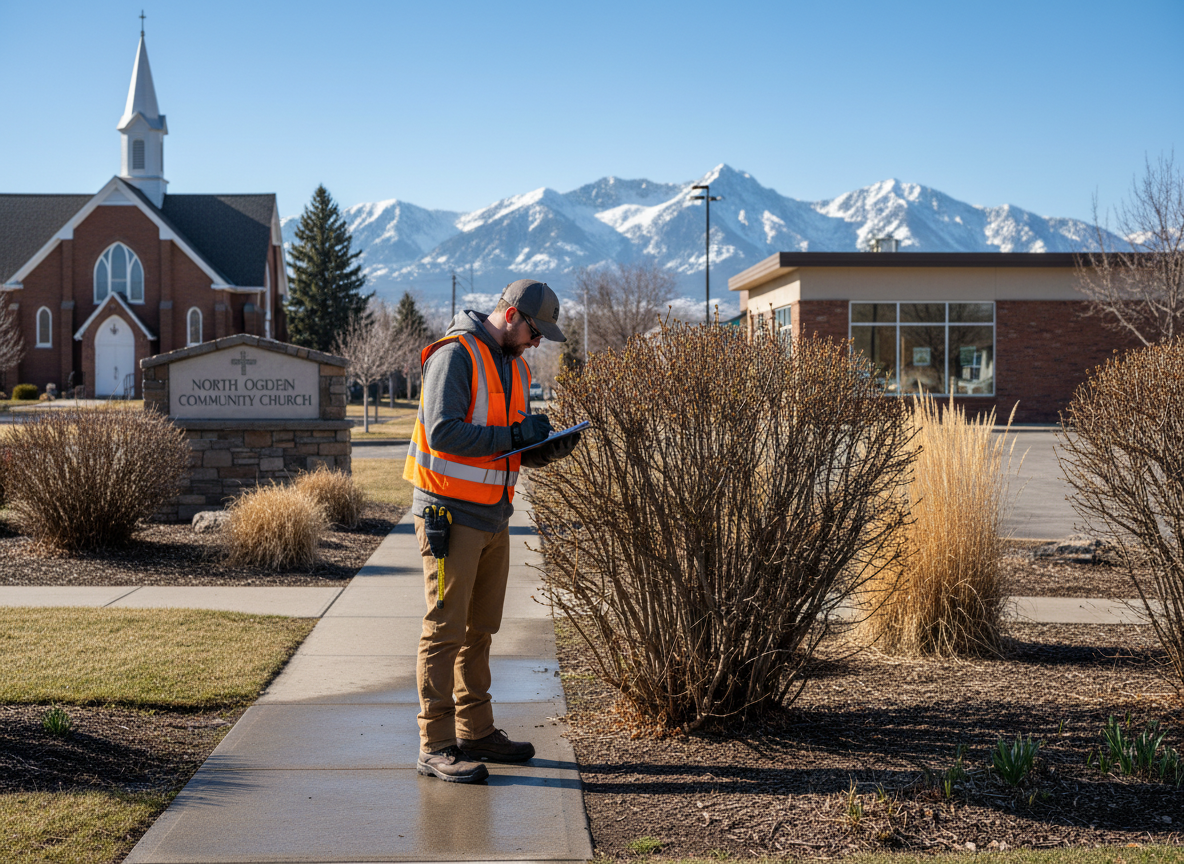
- A quick assessment of shrub type, health, and growth pattern
- A pruning plan based on bloom timing and structure
- Clean, correct cuts using the right tools (bypass pruners, loppers, saws as needed)
- Debris cleanup (not just “piled in the corner”)
- A realistic maintenance recommendation so you’re not overpaying for unnecessary visits
At Darrell’s Tree Service, we’ve been serving Northern Utah since 1981. That long view matters. We’re not trying to “make it look good today” at the expense of what it looks like next season.
Simple maintenance tips between pruning visits
If you’re a property manager or homeowner who likes to stay ahead of things, here are a few easy habits that help shrubs stay healthy:
- Water deeply during heat waves: Summer stress shows up later as dieback.
- Mulch (but don’t volcano-mulch): Keep mulch a few inches away from stems.
- Watch for snow load: After heavy storms, gently brush snow off shrubs to prevent splaying.
- Don’t shear everything: If you’re doing quick touch-ups, avoid turning flowering shrubs into tight boxes.
- Call early for storm damage: Broken limbs can invite disease.
If you’re seeing repeated dieback or odd thinning, it may be a bigger plant health issue. Our team can help evaluate overall landscape health, and if trees are involved, we can also provide a proper assessment.
Tree service overview: https://darrellstreeservices.com/tree-service/
Shrub pruning in North Ogden for HOAs, churches, and commercial sites
If you manage a site in North Ogden—especially high-visibility areas like entrances and common spaces—consistent shrub pruning is one of the best “ROI” landscape moves you can make.
It:
- Keeps the property looking clean and cared for
- Reduces complaints
- Improves safety and visibility
- Prevents expensive shrub replacement later
And if you’re coordinating seasonal work, shrub pruning pairs well with:
- Spring tree pruning (wind prep)
- Summer risk reduction (deadwood removal)
- Fall cleanup and hazard checks
- Winter storm readiness
If you’re not sure what your site needs, we can walk it with you and make a simple plan.
Ready for an estimate? (North Ogden + Northern Utah)
If you need shrub pruning in North Ogden, UT, I’d love to help you get it handled in a way that looks great and supports long-term plant health. Whether it’s a commercial property that needs reliable maintenance or a residential yard that just needs a reset, we’ll show up, do it safely, and clean up thoroughly.
Schedule a consultation or request a free estimate here: https://darrellstreeservices.com/appointment
And if your shrubs are part of a bigger cleanup—trees, stumps, or storm damage—we can help with that too.
Stump grinding: https://darrellstreeservices.com/stump-grinding/
Emergency tree service: https://darrellstreeservices.com/emergency-tree-removal/
Quick FAQ: shrub pruning basics
Is shrub pruning the same as trimming?
Not exactly. Trimming is often cosmetic; pruning is selective and improves structure, health, and (often) flowering.
How often should shrubs be pruned?
It depends on the shrub type and the look you want. Many shrubs do well with an annual or seasonal pruning plan, plus light touch-ups as needed.
Can pruning kill a shrub?
Aggressive or poorly timed pruning can absolutely stress or damage a shrub. That’s why identifying the shrub and pruning at the right time matters.
Do you work outside North Ogden?
Yes. We serve Northern Utah communities across the Wasatch Front, including Ogden, Pleasant View, Harrisville, Riverdale, Roy, Clinton, Clearfield, Sunset, Layton, South Weber, West Haven, Hooper, Farr West, Marriott-Slaterville, and Brigham City.
