Limb Removal Near Me in Utah: Cost, Safety Tips, and When to Call a Pro | Darrell’s Tree Service
Ogden windstorms, heavy spring snow, and hot summer drought can all turn a “small” tree limb into a real problem fast—especially when it’s hanging over a parking lot, sidewalk, roofline, or power line. If you’re searching “limb removal near me” in Northern Utah, you’re probably looking for one thing: relief. You want the hazard handled safely, the property protected, and the cleanup done without turning into a bigger headache.
Below is a practical, local guide to limb removal in Utah—what it typically costs, what’s usually included, what you can (and shouldn’t) DIY, and when it’s time to call a pro. We serve commercial and residential clients across Northern Utah, including Ogden, North Ogden, Layton, and Salt Lake City, so we’ll keep this grounded in what actually happens here.
What “limb removal” usually means (and why it matters)
“Limb removal” can mean a few different things, and the details matter because they affect both safety and price.
- Hazard limb removal: Taking off a cracked, split, dead, or storm-damaged limb that could fall.
- Limb trimming/pruning: Selective cuts to reduce weight, improve clearance, or keep the tree healthy.
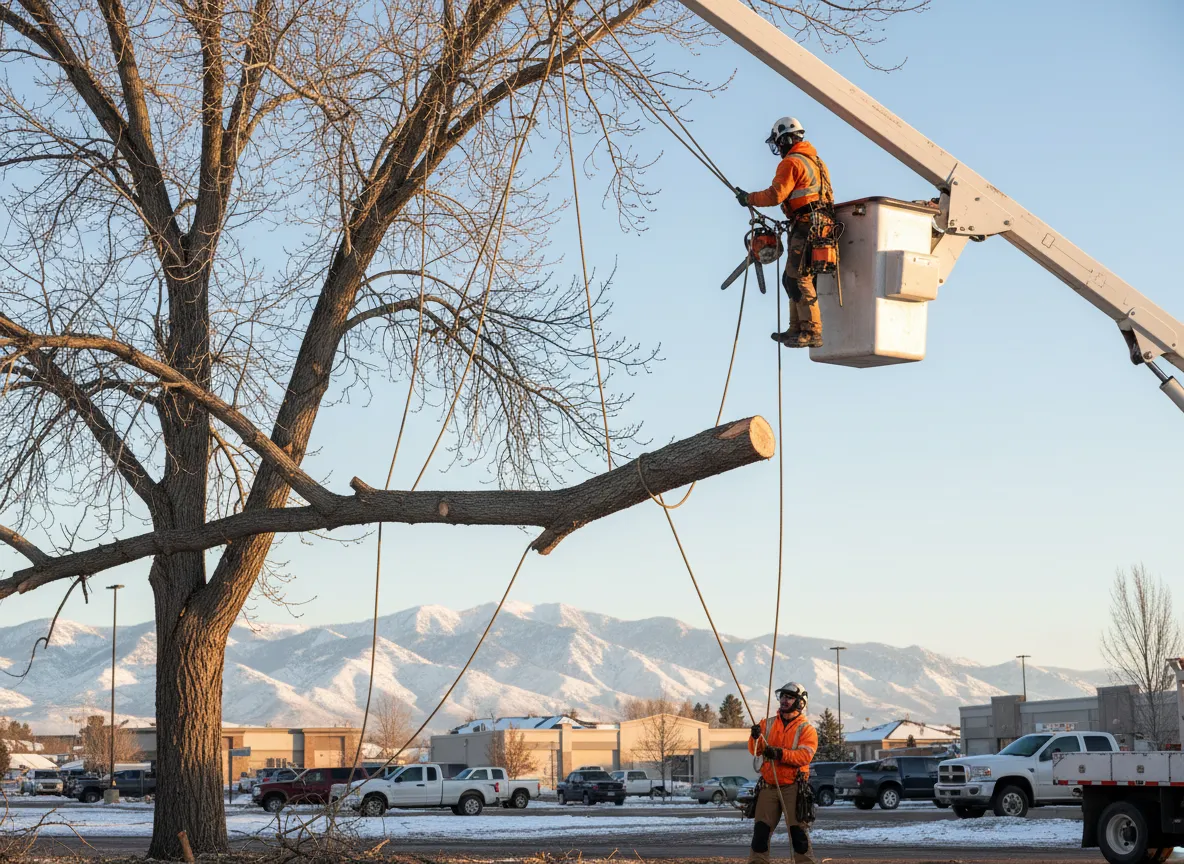
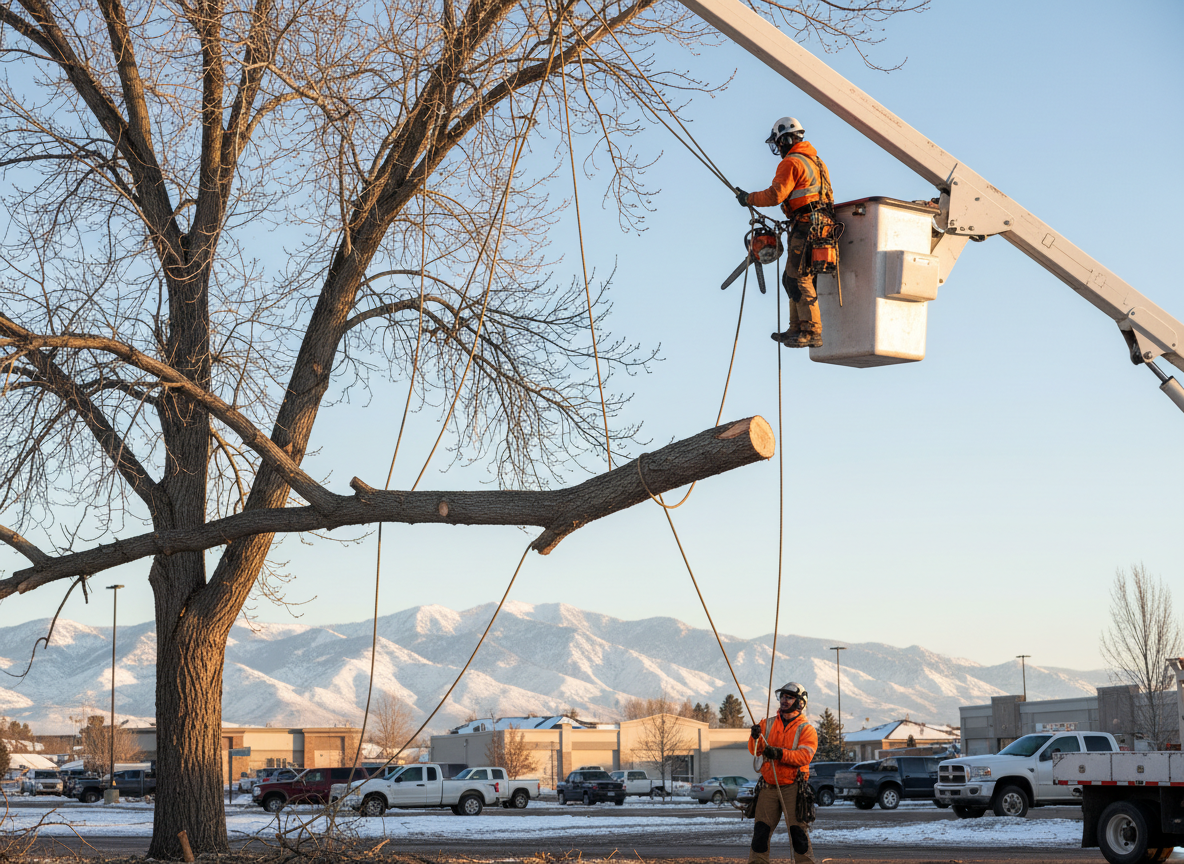
- Large limb rigging: Removing heavy limbs in pieces using ropes, friction devices, and controlled lowering—common over roofs, fences, parked cars, and landscaped areas.
- Emergency limb removal: Same work, but done urgently after a storm or when a limb is actively threatening people/property.
For businesses and commercial properties, limb issues aren’t just “tree problems.” They’re liability problems. A falling limb can damage vehicles, injure visitors, block entrances, or take out signage and lighting. For HOAs, churches, and property managers, proactive limb removal is often cheaper than reacting after something breaks.
Common reasons Northern Utah limbs become dangerous
Northern Utah trees deal with a unique mix of stressors. Here are the most common causes we see in Ogden, Layton, and surrounding areas:
Snow load and freeze/thaw cycles
Wet snow is heavy. Add a freeze overnight, then a thaw, and limbs can crack under shifting weight—especially on trees with:
- Long, extended limbs
- Dense canopies that catch snow
- Previous pruning wounds
- Hidden internal decay
Windstorms (especially canyon and valley gusts)
Wind doesn’t just “blow limbs off.” It twists them. That twisting can split a limb at the union (where it meets the trunk), creating a partially attached “hanger” that’s unpredictable and dangerous.
Drought stress and summer heat
When trees are stressed, they’re more likely to drop limbs—sometimes called “summer branch drop.” You may not see obvious warning signs until a limb fails.
Disease, pests, and internal decay
A limb can look fine on the outside but be compromised inside. Mushrooms at the base, hollow sounds, peeling bark, or dead tips can all signal structural weakness.
Poor past pruning
“Topping” or improper cuts can cause weak regrowth and poor limb attachments. Those fast-growing shoots can become heavy and break later.
Limb removal cost in Utah: what to expect
If you’re trying to budget, you’re not alone. The honest answer is: limb removal pricing depends on access, risk, and complexity.
Here are the biggest factors that influence limb removal cost in Utah:
1) Limb size and height
A small limb from a small ornamental tree is very different from a 20-inch diameter limb 40 feet up.
2) What’s underneath the limb
If the limb is over:
- A roof
- Vehicles
- A playground
- A busy sidewalk
- A parking lot
- Power lines
…then the job usually requires rigging, controlled lowering, and extra crew coordination.
3) Access for equipment
Can we safely use a bucket truck? Do we need a climber? Is there a narrow gate, steep slope, or tight courtyard? Access changes labor time and equipment needs.
4) Cleanup and hauling
Some customers want the limb cut and stacked neatly. Others want full haul-off and debris removal. Cleanup level affects the total.
5) Emergency timing
After storms, emergency limb removal can cost more due to urgency, scheduling, and increased risk.
Typical price ranges (general guidance)
Because every tree and property is different, think of these as broad ranges:
- Minor limb removal (easy access, small limb): often a few hundred dollars
- Medium limb removal (height, moderate rigging, cleanup): several hundred to over a thousand
- Large hazard limb removal (heavy rigging, high risk, complex access): can be $1,000+ depending on scope
The fastest way to get a real number is a quick on-site look. If you’re in Northern Utah and want a clear, no-pressure quote, you can request an estimate through our appointment page.
What’s typically included in professional limb removal
When you hire a tree service for limb removal near you, here’s what should be part of a professional approach:
- Safety assessment: identifying hangers, cracks, decay, and drop zones
- Property protection: planning cuts and lowering to avoid damage
- Proper cuts for tree health: reducing the chance of decay and weak regrowth
- Debris management: cutting, chipping, hauling, or stacking—based on your preference
- Site cleanup: raking/blowing and leaving the area tidy
For commercial properties, we also think about traffic flow, pedestrian safety, and minimizing disruption—especially for HOAs, churches, and businesses that can’t shut down access for long.
DIY limb removal: what’s safe, and what’s not
We get it—sometimes you look at a limb and think, “I can handle that this weekend.” And sometimes you can. But a lot of injuries happen because limb removal is deceptively dangerous.
DIY may be reasonable when:
- The limb is small (think: smaller than your wrist/forearm)
- It’s low (you can reach it from the ground with a pole pruner)
- There are no targets underneath (no roof, fence, cars)
- The limb is not under tension (not bent, cracked, or hung up)
DIY is not recommended when:
- The limb is above a roof, driveway, or public area
- The limb is cracked, split, or partially attached (“hanger”)
- You need a ladder or to climb the tree
- The limb is near power lines
- The limb is large enough to cause serious damage if it swings or drops
If you’re a property manager or business owner, DIY limb removal can also create liability exposure. A professional crew brings training, equipment, and insurance—so the risk isn’t sitting on your shoulders.
Safety tips if you’re dealing with a dangerous limb right now
If you’re reading this because a limb is actively threatening your property, here are a few practical steps:
- Keep people away from the drop zone. Don’t “just take a quick look” underneath it.
- Move vehicles if you can do it safely. Don’t park under the limb.
- Don’t cut a hanging limb from below. It can shift, roll, or spring.
- Avoid ladders. Most serious injuries happen from falls.
- Treat power lines as energized. If a limb is touching a line, keep your distance and call a professional.
How pros remove big limbs safely (what you’re paying for)
When a limb is large or over something important, the goal is controlled removal—not “drop and hope.” Here’s what that typically looks like:
Step 1: Evaluate the limb and the tree
We look for cracks, decay, included bark, weak unions, and how the limb is loaded (weight distribution). This tells us where it may fail.
Step 2: Set a safe work plan
We establish:
- Drop zone and exclusion area
- Equipment plan (climb vs. bucket truck)
- Rigging points and lowering path
- Communication plan for the crew
Step 3: Rigging and controlled lowering
For big limbs, we often remove them in sections using ropes and friction devices so pieces are lowered safely—especially over roofs, fences, and landscaping.
Step 4: Proper pruning cuts
Good cuts reduce the chance of decay and help the tree recover. Poor cuts can create long-term problems.
Step 5: Cleanup and haul-off
We chip branches, remove wood, and leave the site clean—because the job isn’t done if your parking lot is full of debris.
Limb removal vs. pruning: which one do you actually need?
A lot of “limb removal near me” searches are really about one of these goals:
- Safety: remove dead, cracked, or overextended limbs
- Clearance: keep limbs away from buildings, signs, lights, and walkways
- Tree health: reduce rubbing branches, improve structure, remove diseased wood
- Aesthetics: shape and balance
If the tree is otherwise healthy, strategic pruning can solve the issue without over-thinning the canopy. If the limb is compromised, removal is the right call.
If you’re unsure, an arborist-style assessment is the best first step. (And if your property has multiple trees, we can help you prioritize what’s urgent vs. what can wait.)
Commercial property considerations (HOAs, churches, businesses, city contracts)
Commercial sites have a few extra layers to think about:
Liability and documentation
If a limb fails and damages a vehicle or injures someone, the question becomes: “Was this foreseeable?” Regular inspections and timely hazard limb removal help show you’re managing risk responsibly.
Tenant and visitor experience
A hanging limb over a walkway makes people uneasy. Clean, well-maintained trees signal that the property is cared for.
Access and scheduling
We can often schedule work to minimize disruption—early morning, off-peak hours, or staged work across multiple areas.
Budget planning
If you manage multiple properties, we can help build a maintenance rhythm (seasonal pruning, hazard checks) so you’re not surprised by emergency calls.
Best times of year for limb removal in Northern Utah
There’s no single “perfect” time, but here’s a practical guide:
- Late winter / early spring: great for structural pruning before growth starts
- Spring storms: common time for emergency limb removal after wind/snow
- Summer: watch for drought stress and sudden limb drop
- Fall: good time to address clearance before winter snow load
If a limb is dangerous, don’t wait for the “ideal season.” Safety comes first.
Signs it’s time to call a professional (don’t wait on these)
If you see any of the following, it’s smart to get a pro involved:
- A limb is cracked, split, or hanging
- The tree has dead limbs larger than a couple inches in diameter
- Limbs are over your roof, parking lot, or high-traffic areas
- You see fungus, cavities, or major decay
- The tree leans suddenly or the soil is heaving at the base
- Limbs are near power lines
Related services that often go hand-in-hand
Many limb removal jobs reveal a bigger opportunity to protect the tree (and your property) long-term. Depending on what we find, you may also want to explore:
- Tree pruning and trimming for clearance and structure: https://darrellstreeservices.com/
- Tree removal if the tree is failing or unsafe: https://darrellstreeservices.com/
- Stump grinding after removals or storm failures: https://darrellstreeservices.com/
- Land clearing for commercial lots and development: https://darrellstreeservices.com/
(If you tell us your property type—HOA, church, small business, residential—we’ll point you to the most relevant option.)
Why Northern Utah property owners choose Darrell’s Tree Service
When you’re dealing with a dangerous limb, you’re not just hiring “someone with a chainsaw.” You’re hiring a team to protect people, buildings, and your peace of mind.
Darrell’s Tree Service has been serving Northern Utah for decades, and we’re known for a safety-first approach, honest recommendations, and reliable cleanup. We work with both commercial and residential clients, and we’re used to the realities of Utah weather—snow load, wind, and drought.
Ready for a safer property? (Soft next step)
If you’re in Ogden, North Ogden, Layton, Salt Lake City, or anywhere in Northern Utah and you’re worried about a limb—or you just want a professional opinion before it becomes an emergency—we’re happy to help.
Request a free estimate or consultation here: https://darrellstreeservices.com/appointment
We’ll take a look, explain what we’re seeing in plain language, and give you a straightforward plan to get things safe again.
Quick FAQ: Limb removal near me (Utah)
How long does limb removal take?
Small jobs can be quick. Larger, rigged removals may take a few hours or more depending on access and cleanup.
Will limb removal hurt my tree?
Done correctly, removing a hazardous or poorly placed limb can improve tree health and reduce future risk. Poor cuts or over-thinning can stress the tree.
Do you haul away the debris?
Yes—if you want. We can chip and haul, or we can stack wood neatly if you prefer to keep it.
Can you remove limbs after a storm?
Yes. If you have a hanging limb after wind or snow, keep people away from the area and reach out for an assessment.
