Emergency Tree Removal in Utah: When It’s Urgent, What It Costs, and What to Expect | Darrell’s Tree Service
If you manage a property in Ogden, Layton, or anywhere along the Wasatch Front, you already know how fast Utah weather can turn a “looks fine” tree into a real problem. One heavy wet snow, a spring windstorm, or a freeze/thaw cycle can crack a limb, shift a trunk, or expose roots—sometimes overnight.
Emergency tree removal in Utah is about one thing: reducing immediate risk to people, buildings, vehicles, and critical access points. Below are the most common situations where it’s genuinely urgent, plus a few scenarios that feel scary but may not require a same-day response.
It’s urgent if:
- A tree (or large limb) is on a building (roof, awning, fence, or structure) or actively pressing on it.
- A tree is leaning suddenly—especially if the soil is heaving, roots are lifting, or the lean appeared after wind or snow.
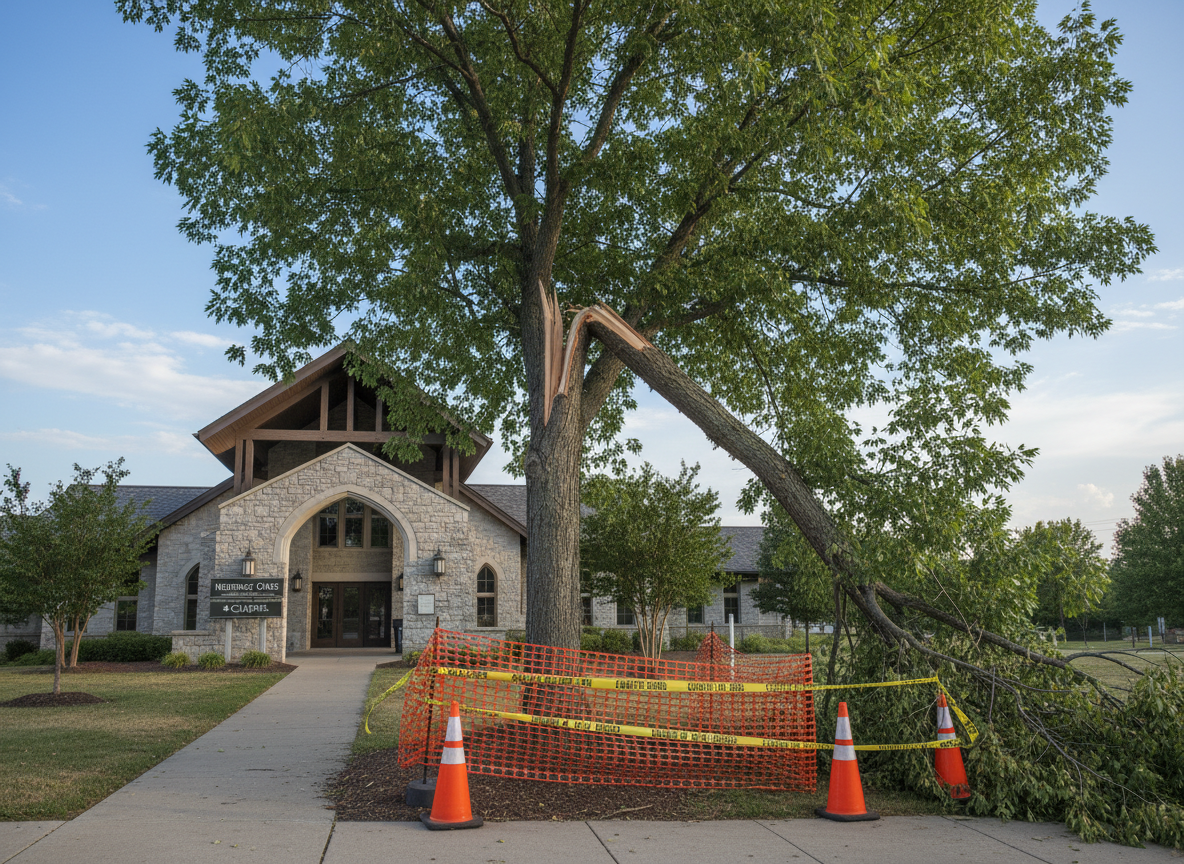
- A split trunk or major crack is visible, particularly if the crack runs vertically or the canopy is pulling away from the main stem.
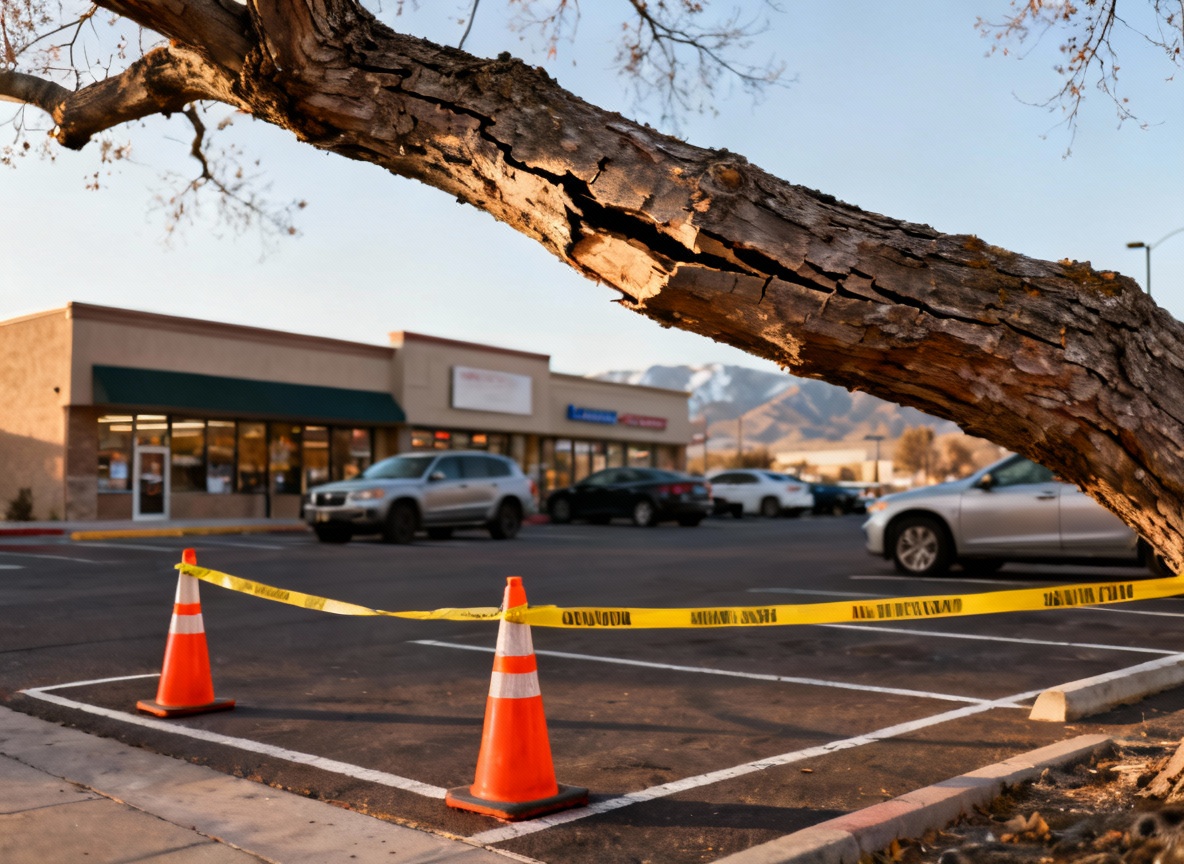
- A limb is hanging over a high-traffic area (parking lots, sidewalks, playgrounds, entrances, drive-thrus).
- The tree is contacting power lines or has pulled lines down.
- Storm damage has blocked access (gates, drive lanes, fire lanes, delivery routes).
It may be able to wait (but still needs a professional look) if:
- A small limb fell but the canopy is otherwise stable.
- The tree has minor deadwood that’s not over a target area.
- The tree is leaning slightly but has been that way for years (still worth assessing).
If you’re not sure, that’s normal. The safest move is to treat it like a hazard until a pro confirms otherwise.
What to do right now (before a crew arrives)
When a tree is damaged, your goal is to keep people safe and prevent the situation from getting worse.
1) Keep people out of the drop zone
A good rule: stay at least 1.5x the tree’s height away. For commercial properties, rope off the area and redirect foot traffic.
2) Don’t “test” it
Avoid pushing on a leaning tree or pulling on a hanging limb. If the wood fibers are compromised, that extra force can trigger a failure.
3) Treat power lines as live
If a tree is touching a line—or a line is down—keep everyone away and call the utility provider. Tree crews coordinate around utilities, but you should never approach it yourself.
4) Document the damage
For HOAs, churches, property managers, and businesses, quick photos help with insurance and internal reporting. Capture:
- The whole tree and the target (building/parking area)
- Close-ups of cracks/splits
- Any damage to structures
5) Call a licensed, insured team
Emergency tree removal should be handled by a crew that’s fully licensed and insured, with the right equipment and training to work safely around structures.
Why emergency tree removal is different than “regular” removal
A standard removal is planned: clear access, stable tree, predictable cuts. Emergency work is the opposite.
In Northern Utah, emergency calls often involve:
- Wet snow load failures (heavy snow that sticks and bends limbs)
- Wind-thrown trees (root plate failure after gusts)
- Freeze/thaw damage (cracks that worsen over time)
- Drought-stressed trees that look fine until they suddenly fail
Emergency tree removal adds complexity because the tree is already unstable. That means:
- More rigging and controlled lowering
- More time spent on hazard assessment
- Higher likelihood of needing a bucket truck or crane
- More crew members on site for safety
Signs a tree is hazardous (even if it hasn’t fallen yet)
Businesses and commercial properties often have high-traffic areas where a “near miss” is still a serious liability. Here are red flags that should trigger a professional assessment.
Sudden lean or soil movement
If the ground looks lifted or cracked near the base, the root system may be failing.
Fresh cracks in trunk or major limbs
A new crack can mean internal failure. If you can see daylight through a split, treat it as urgent.
Hanging or broken limbs (“widowmakers”)
These can drop without warning—especially after wind or snow.
Dead or dying sections in the canopy
Deadwood is brittle and more likely to break in storms.
Fungal growth at the base
Mushrooms or conks can indicate internal decay.
Previous storm damage that never got addressed
A partially failed limb can keep tearing under the next weather event.
If you’re managing an HOA, church, school, or retail property, it’s worth building a simple “storm checklist” so you can respond quickly and document hazards.
Emergency tree removal in Utah: what it costs (and what affects pricing)
Let’s talk about the question everyone asks: What does emergency tree removal cost in Utah?
There isn’t a one-size-fits-all number because emergency work is priced based on risk, access, and complexity—not just tree size. Here are the most common factors that influence cost.
1) How urgent the response is
Same-day, after-hours, weekend, or storm-surge calls can cost more because crews are rearranging schedules and mobilizing quickly.
2) Tree size and species
A large cottonwood or mature pine is a different job than a smaller ornamental tree. Wood density and branching structure matter.
3) Location and targets
A tree over a roof, parking lot, playground, or storefront requires controlled rigging to prevent further damage.
4) Access for equipment
If a bucket truck can reach the work area, removal is often safer and more efficient. Tight backyards, fenced areas, or steep slopes can increase labor.
5) Complexity of the hazard
A split trunk, uprooted base, or tree tangled in other trees requires more planning and rigging.
6) Debris removal and cleanup
Do you want everything hauled away? Chipped on-site? Logs stacked? Emergency jobs often include extra cleanup because debris is scattered.
7) Stump grinding (optional)
Stump grinding is usually separate from emergency removal. If you need the area cleared for replanting or safety, ask about stump grinding/removal.
Best practice: Get a written estimate that clearly states what’s included: removal, debris haul-off, stump grinding, and any special equipment.
What to expect during an emergency tree removal
If you’ve never been through an emergency tree removal, here’s what the process typically looks like when a professional crew shows up.
Step 1: On-site hazard assessment
The crew will assess:
- Lean direction and load
- Cracks, splits, and compression points
- Root stability
- Targets (structures, vehicles, pedestrian areas)
- Utility lines and access
This is where experience matters. A certified arborist (or a crew trained under one) can spot failure points that aren’t obvious.
Step 2: Site control and safety setup
For commercial properties, this often includes:
- Cones/tape to block off sidewalks and parking stalls
- Spotters to manage pedestrian traffic
- Equipment staging to keep access lanes open
Step 3: Controlled removal (often piece by piece)
Emergency removals are rarely a simple “fell it in one direction.” Most hazardous trees are dismantled in sections using rigging.
A bucket truck may be used to:
- Safely access damaged limbs
- Reduce climbing risk
- Make controlled cuts above structures
Step 4: Debris management and cleanup
A professional crew should leave the area safer than they found it:
- Limbs and brush chipped
- Logs cut and stacked or hauled
- Work area raked/blown
- Final walk-through to confirm hazards are addressed
Step 5: Follow-up recommendations
Sometimes emergency removal solves the immediate danger, but you may still need:
- Pruning/trimming on nearby trees
- Cabling/bracing for a valuable tree that can be saved
- Tree health or risk assessment for the rest of the property
Common emergency scenarios we see in Northern Utah
Every region has its patterns. In Northern Utah, these are some of the most common emergency calls.
Wet snow overload
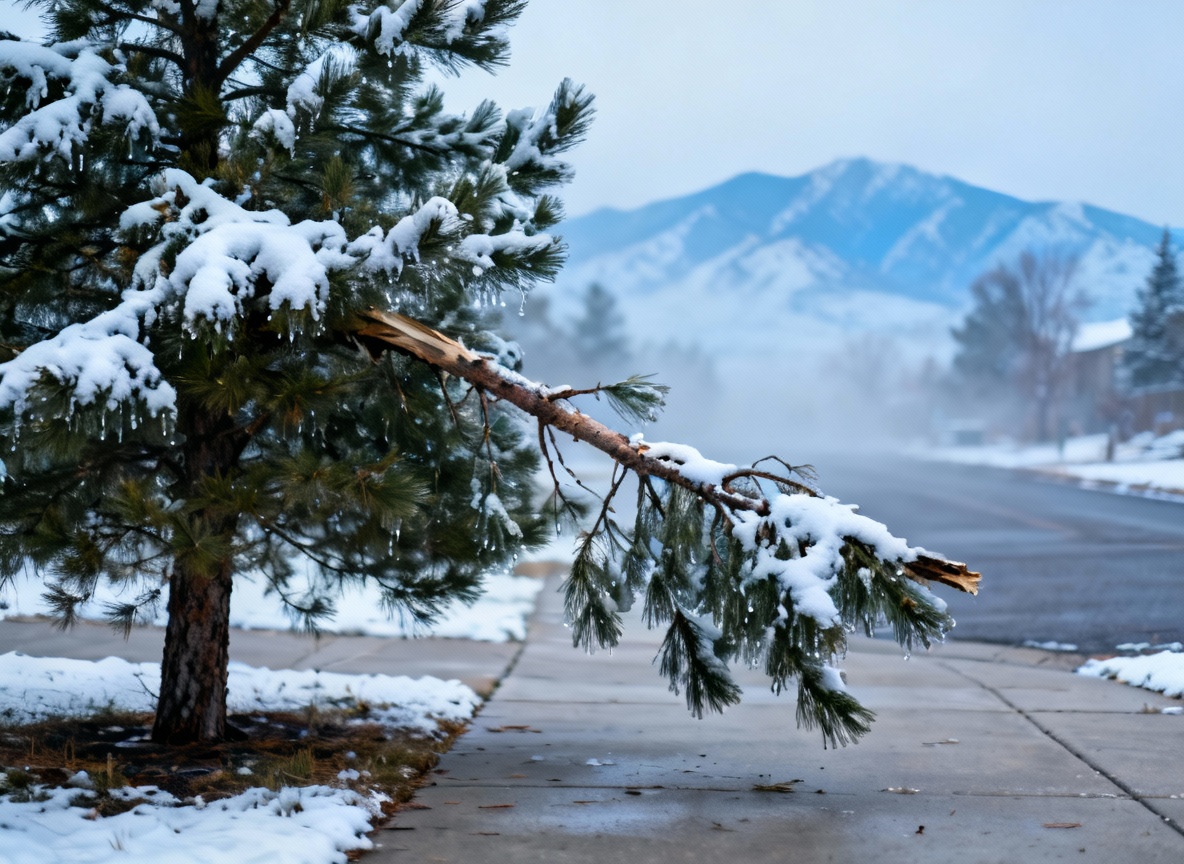
Tremonton-style storms and Wasatch Front snow events can dump heavy, wet snow that clings to branches. Pines and mature shade trees can bend, split, or drop limbs.
Spring windstorms
Gusty spring winds can expose weak unions, decay pockets, or root issues—especially after wind or snow.
Summer drought stress
Hot summers and irrigation inconsistencies can weaken trees over time. The scary part is that drought stress doesn’t always look dramatic until a limb fails.
Freeze/thaw cracking
Temperature swings can widen existing cracks. A tree that “made it through winter” can still fail when the next windstorm hits.
How businesses and property managers can reduce emergency calls
Emergency work is sometimes unavoidable—but many hazards are preventable with a simple maintenance plan.
Schedule routine pruning
Regular pruning reduces:
- Overextended limbs
- Deadwood
- Weight imbalance
It also improves wind flow through the canopy.
Get a risk assessment on high-target trees
If you have trees near:
- Parking lots
- Building entrances
- Playgrounds
- Power lines
…a professional tree health, hazard, and risk assessment can identify issues early.
Don’t ignore “small” warning signs
A little crack, a small fungus, or a subtle lean can be the early stage of a bigger failure.
Plan for storm season
For HOAs, churches, and commercial properties, it helps to have:
- A preferred vendor list
- A map of high-risk trees
- A simple internal process for documenting hazards
Can a hazardous tree be saved instead of removed?
Sometimes, yes. Not every emergency call ends with removal.
Depending on the tree and the damage, options may include:
- Pruning/trimming to remove broken limbs and reduce weight
- Cabling and bracing to support weak unions
- Treatment for sick trees if the issue is health-related
- Pine beetle control when infestations are caught early
A trustworthy crew will tell you when removal is necessary—and when it isn’t.
Why hiring a licensed, insured local crew matters
Emergency tree removal is not the time to gamble on the cheapest option.
A professional team brings:
- Proper rigging and safety systems
- Equipment like bucket trucks for safer access
- Experience working around structures and high-traffic areas
- Full licensing and insurance for peace of mind
For businesses and property managers, that last point matters. Liability and safety are part of the job.
Soft next step: get an expert set of eyes on it
If you’re dealing with storm damage or a hazardous tree in Northern Utah—Ogden, Roy, Clearfield, Layton, Brigham City, or anywhere nearby—Darrell’s Tree Service can help you make the safest call quickly.
We’ll assess the risk, explain your options in plain language, and handle emergency tree removal safely and professionally.
Request an estimate or consultation here: https://darrellstreeservices.com/appointment
Related services (helpful links)
If your situation isn’t an immediate emergency, these services can help prevent the next one:
- Tree removal: https://darrellstreeservices.com/tree-removal
- Emergency tree removal / storm damage cleanup: https://darrellstreeservices.com/emergency-tree-removal
- Tree trimming/pruning: https://darrellstreeservices.com/tree-trimming
- Stump grinding/removal: https://darrellstreeservices.com/stump-grinding
- Tree health & risk assessment: https://darrellstreeservices.com/tree-risk-assessment
Quick FAQ
How fast can you respond for emergency tree removal in Utah?
It depends on current conditions and call volume, but if it’s a true hazard (tree on a structure, blocking access, or threatening people/property), we prioritize urgent situations.
Do you work with commercial properties and HOAs?
Yes. We regularly help HOAs, churches, property managers, and businesses across Northern Utah.
Will you haul everything away?
We can chip and haul debris, and we can also cut and stack logs if you prefer. Just confirm what you want included in the estimate.
Do you offer stump grinding after emergency removal?
Yes—stump grinding/removal is available if you want the area cleared after the immediate hazard is handled.
