Darrell’s Tree Service
Trusted Residential and Commercial Tree Service for Northern Utah
Serving Ogden & The Wasatch Front Since 1981
Healthy Trees.
Happy Propertys.
Peace of Mind.
For over 40 years, Darrell’s Tree Service has been Northern Utah’s go-to team for expert tree care, removal, and landscape solutions. Our certified arborists combine deep local knowledge with professional training to keep your property safe, beautiful, and thriving, season after season.
Our Services
OUR SERVICES
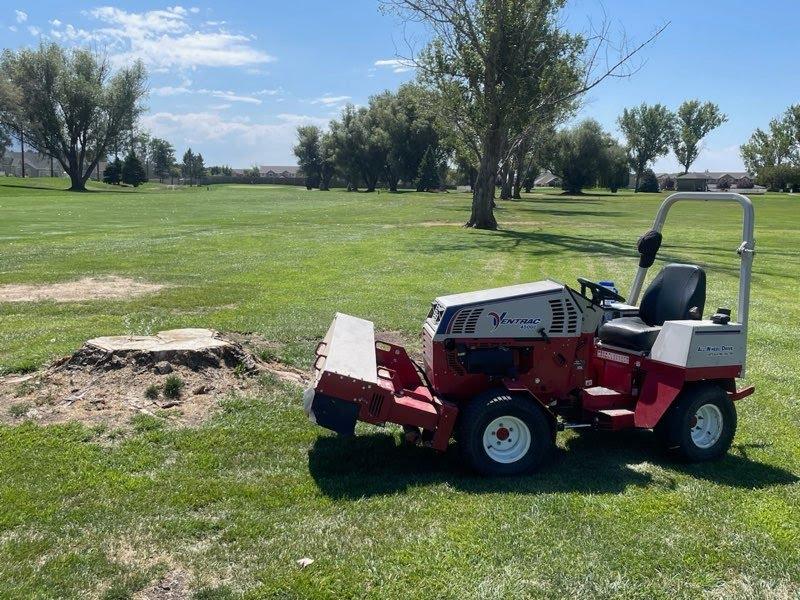
Tree Removal &
Stump Services
Tree Removal, Hazardous Tree Removal, Stump Grinding & Removal, Land Clearing.
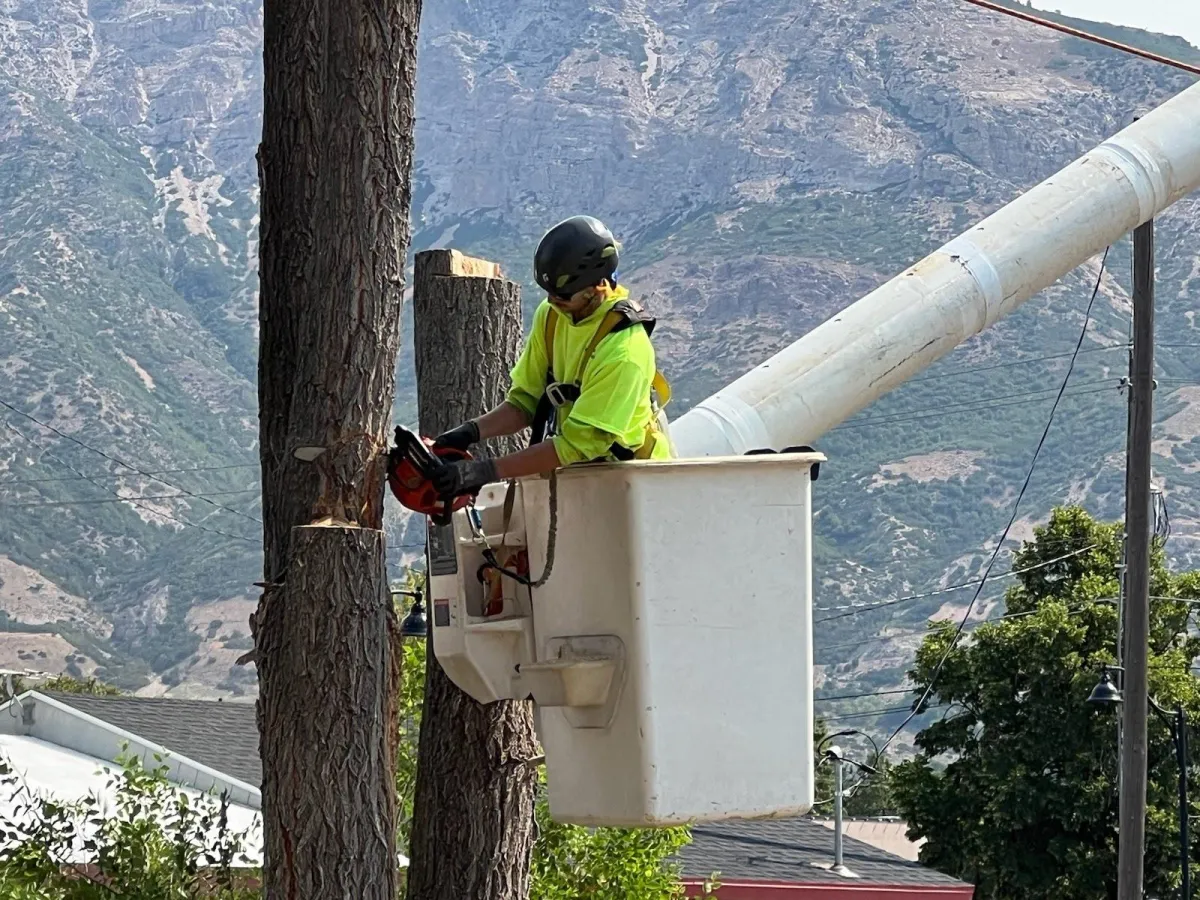
Tree & Shrub Care
Trimming & Pruning, Shrub & Landscape Maintenance, Fertilization, Treatment
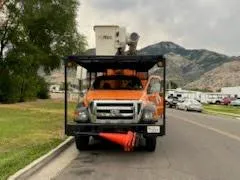
Emergency &
Storm Services
Emergency Tree Services, Storm Damage Response
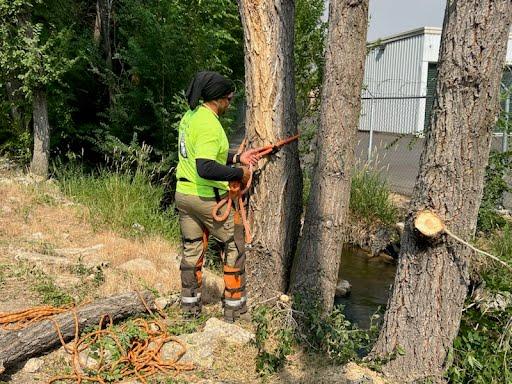
Tree Health & Structural Support
Diagnosis & Risk Management, Cabling, Bracing & Preservation
Why Choose Darrell’s?
Trusted, Local Tree Care Experts
Since 1981
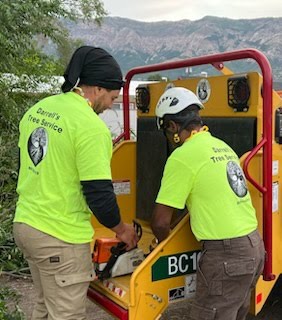
Here's what you get:
Locally Owned & Operated Since 1981
Certified, Experienced Arborists
Free, No-Obligation Estimates
Fully Licensed & Insured
Prompt, Thorough Cleanup, Every Job
4.6-Star Rated by Your Neighbors
Areas We Serve
CLIENT'S REVIEWS
WE HANDLE EVERYTHING FOR YOU
OVER
40
YEARS OF SERVICE
OVER
52,000
TREES TAKEN CARE OF
OVER
30
COMMUNITIES SERVED
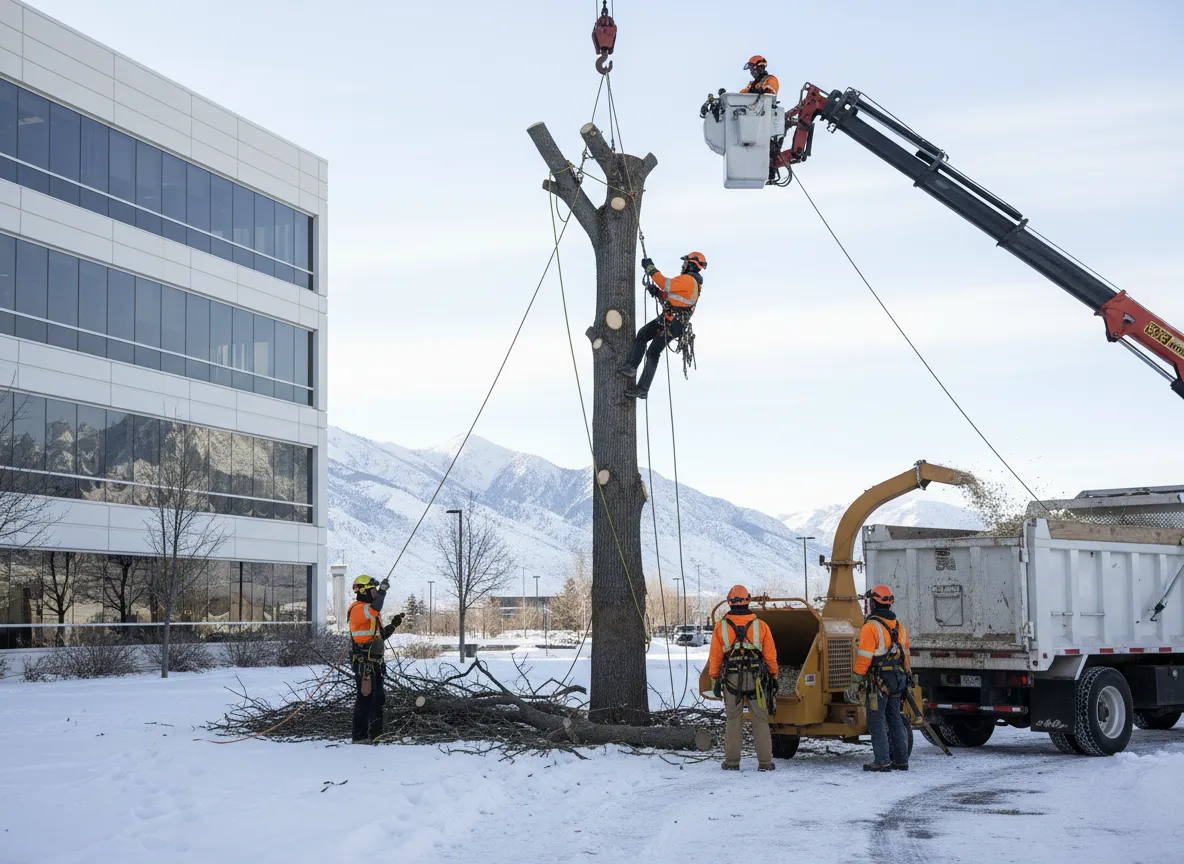
Commercial Tree Service
We serve cities, churches, schools, hospitals, property management companies, HOAs, and businesses throughout the region. Our certified arborists and fully insured team deliver professional tree removal, pruning, stump grinding, and root grinding services tailored to meet the unique needs of commercial properties.
Whether you manage a municipal facility, institutional campus, apartment complex, or retail property, we provide reliable, efficient service that protects your investment and maintains your landscape's health and safety. From emergency storm response to routine maintenance, Darrell's Tree Service combines certified expertise with competitive pricing to keep your commercial property looking its best. Contact us today for a free estimate and discover why Weber County, Davis County, Box Elder County, and Salt Lake County trust us leading organizations trust us with their tree care needs.
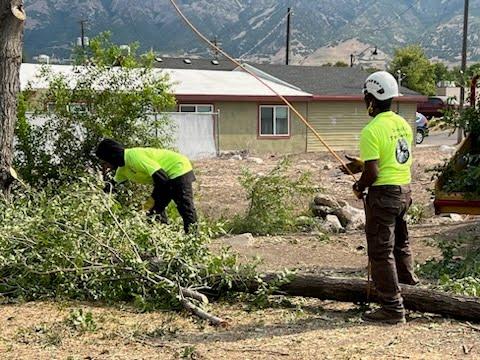
Residential Tree Service
Darrell's Tree Service is the trusted choice for residential tree care throughout Ogden, Layton, Salt Lake City, and surrounding Northern Utah communities. With over 40 years of local expertise, our certified arborists deliver professional tree removal, pruning, stump grinding, and root grinding services designed to protect your home and property. Whether you're dealing with storm damage, overgrown trees threatening your foundation, or routine maintenance to keep your landscape healthy and safe, our fully insured team provides reliable, efficient service at competitive prices.
We understand that your home is your most valuable investment, which is why we treat every residential project with the care and attention it deserves. From emergency 24/7 response to scheduled maintenance, Darrell's Tree Service combines certified expertise with transparent pricing and exceptional customer service. Contact us today for a free estimate and experience why homeowners from as far North as Logan and Tremonton to Salt Lake City and everything in between Northern Utah.
RECENT POSTS

Tree Risk Assessment in Utah: What It Includes and When You Need One | Darrell’s Tree Service
Tree Risk Assessment in Utah: what it is (and why it matters here)
If you manage a property in Ogden, Layton, or anywhere along the Wasatch Front, you’ve probably had that moment: a big limb over a parking lot, a leaning trunk after a windstorm, or a mature shade tree that “seems fine”… until it doesn’t. In Northern Utah, snow load, spring wind, summer drought, and freeze/thaw cycles can quietly turn a healthy-looking tree into a real liability.
That’s where a tree risk assessment comes in. It’s a practical, professional way to understand how likely a tree is to fail—and what that failure could hit if it does. For businesses, HOAs, churches, and city properties, it’s often the difference between proactive maintenance and an emergency call after damage happens.
What is a tree risk assessment?
A tree risk assessment in Utah is a structured evaluation performed by a trained professional (ideally a certified arborist) to identify defects, stress, and site conditions that increase the chance of tree failure. “Failure” can mean a branch breaking, the trunk splitting, or the entire tree uprooting.
A good assessment doesn’t just point out problems—it helps you decide what to do next:
- Is the risk low enough to monitor?
- Does the tree need pruning, cabling/bracing, or treatment?
- Is removal the safest option?
- Should you adjust the area around the tree (parking, foot traffic, play areas, etc.)?
For commercial properties, it’s also about documentation and due diligence. If you’re responsible for public safety—customers, tenants, students, congregation members, or residents—knowing the condition of your trees is part of responsible property management.
What’s evaluated during a tree risk assessment (roots, trunk, canopy, and targets)
A thorough tree risk assessment looks at the whole system, not just what’s obvious from the street. Here’s what’s typically evaluated.
1) Roots and the root flare (the “foundation”)
In Utah, root issues are common because of compacted soils, construction disturbance, irrigation patterns, and drought stress.
During an assessment, an arborist will look at:
- Root flare visibility (the base where the trunk widens). A buried root flare can lead to decay and instability.
- Soil conditions (compaction, saturation, erosion, grade changes).
- Root damage from trenching, sidewalks, driveways, or recent landscaping.
- Fungal indicators near the base (mushrooms, conks), which can signal internal decay.
If you’ve ever seen an arborist examining the root flare and soil conditions during a risk assessment in Utah, that’s not just “extra thoroughness”—it’s because root problems often show up first in the soil line.

2) Trunk structure and defects
The trunk is the main load-bearing column. In Northern Utah, heavy wet snow and wind can exploit weak points.
Common trunk issues we evaluate include:
- Cracks and splits (especially after storms)
- Cavities and decay (sometimes hidden)
- Included bark where multiple stems meet (a frequent failure point)
- Old wounds from previous pruning or impact damage
- Leaning and whether it’s new or longstanding
3) Canopy health and branch structure
The canopy tells a story about the tree’s health and its structural balance.
An arborist will assess:
- Deadwood (dead branches that can drop without warning)
- Overextended limbs (long, heavy branches over targets)
- Poor branch unions (weak attachment points)
- Canopy density and dieback (often tied to drought stress)
- Storm damage and hanging limbs
For businesses and HOAs, this is often where the “risk meets reality”: branches over parking stalls, sidewalks, playgrounds, entryways, and rooftops.
4) Targets: what the tree could hit
Risk isn’t just about the tree—it’s also about what’s underneath it.
A tree over an empty field is different from a tree over:
- Parking lots and drive lanes
- Building entrances
- Outdoor seating areas
- Playgrounds
- Sidewalks and public paths
- Power lines
A tree risk assessment weighs both:
- Likelihood of failure (how likely something breaks)
- Likelihood of impact (how likely it hits something)
- Consequences (what happens if it does)
That’s why commercial properties benefit so much from a formal assessment: the “targets” are usually high-traffic and high-liability.

When you should get a tree risk assessment in Northern Utah
Some property owners wait until a tree looks obviously dangerous. In Utah, that can be too late—especially after a storm or a heavy snow season.
Here are the most common times we recommend a tree risk assessment.
After major weather: windstorms, heavy snow, or ice
Northern Utah storms can do damage you don’t see right away. A branch can crack internally, or roots can shift slightly in saturated soil.
If you’ve had:
- A big wind event in Ogden, Roy, or Clearfield
- Heavy wet snow loading trees down
- Ice accumulation that bent limbs
…it’s smart to have a professional look before the next storm finishes the job.
If you need immediate help after storm damage, our emergency tree removal team can respond quickly: https://darrellstreeservices.com/emergency-tree-removal
If a tree is leaning (or suddenly looks “off”)
A lean that’s been stable for years is different from a lean that appeared after a storm or excavation.
Call for an assessment if you notice:
- Fresh soil cracking or lifting near the base
- Exposed roots
- New lean toward a building or parking area
If there are dead branches, canopy dieback, or “thin” foliage
In drought years (which we see often), trees can decline gradually. Stressed trees are more likely to drop limbs and develop decay.
If the canopy looks sparse, or you’re seeing deadwood, a risk assessment can identify whether the issue is:
- Water stress
- Pest pressure
- Root problems
- Structural weakness
If you manage a commercial property, HOA, church, or city site
If you’re responsible for public spaces, a tree risk assessment is often part of good governance.
It’s especially helpful for:
- Annual or bi-annual property safety reviews
- Prioritizing maintenance budgets
- Reducing surprise emergencies
- Documenting proactive care
For ongoing upkeep, many properties pair risk assessments with routine tree trimming and pruning: https://darrellstreeservices.com/tree-trimming
Before (and after) construction or landscaping changes
Grade changes, trenching, and new hardscapes can damage roots or change drainage patterns.
If your property is:
- Installing new sidewalks
- Expanding parking
- Adding irrigation
- Doing utility work
…a tree risk assessment helps you protect valuable mature trees and avoid future failures.
If a tree has been “topped” or poorly pruned in the past
Topping creates fast, weak regrowth that’s prone to breaking—especially in wind and snow.
If you’ve inherited trees with questionable pruning history, an assessment can help you decide whether corrective pruning, cabling/bracing, or removal is the safest path.
What happens after the assessment: common recommendations
A tree risk assessment should end with clear, practical next steps—not vague warnings.
Here are the most common outcomes.
1) Monitor (low risk)
Sometimes the best answer is: “This tree is okay—keep an eye on it.”
Monitoring might include:
- Re-checking after a season (snow/wind)
- Watching a crack or cavity for changes
- Tracking canopy health through summer
2) Pruning to reduce risk
Strategic pruning can reduce weight, remove deadwood, and improve structure.
This often includes:
- Deadwood removal
- Weight reduction on long limbs
- Clearance pruning over sidewalks/parking
- Structural pruning for young or multi-stem trees
Learn more about professional pruning here: https://darrellstreeservices.com/tree-pruning
3) Cabling and bracing (when appropriate)
For some valuable trees with weak unions or multiple stems, cabling/bracing can add support and reduce the chance of failure.
This is not a “quick fix”—it’s a system that needs proper design and periodic inspection.
4) Treatment for health issues
If risk is tied to decline (not just structure), the plan may include:
- Soil and root-zone improvements
- Watering adjustments
- Pest or disease management
In Northern Utah, we often see stress tied to drought, compacted soils, and irrigation that doesn’t match the tree’s needs.
5) Removal (when risk is unacceptable)
Sometimes removal is the safest, most responsible option—especially when a tree has significant decay, root failure indicators, or is positioned over high-value targets.
If removal is recommended, you’ll want a licensed, insured crew that prioritizes safety and cleanup.
Stump grinding info (often the next step): https://darrellstreeservices.com/stump-grinding
Tree removal info: https://darrellstreeservices.com/tree-removal
Why Utah conditions make tree risk different
A tree that might be “fine” in a mild climate can be higher-risk here because of how our seasons stress wood and roots.
Freeze/thaw cycles
Repeated freezing and thawing can expand cracks and weaken already-compromised wood.
Heavy snow load
Wet snow adds weight fast—especially on trees with dense canopies or poor structure. Multi-stem trees and trees with included bark are common failure candidates.
Wind events
Gusty wind along the Wasatch Front can twist canopies and exploit weak unions.
Drought and heat
Stressed trees don’t compartmentalize decay as well and are more vulnerable to pests. Over time, that can translate into more deadwood and structural weakness.
Commercial properties: liability, documentation, and peace of mind
If you manage a business property, HOA, church, or municipal site, your goals are a little different than a typical homeowner’s:
- Keep people safe
- Reduce liability exposure
- Avoid disruption (blocked entrances, damaged cars, emergency closures)
- Plan maintenance instead of reacting to emergencies
A tree risk assessment helps you prioritize. Instead of guessing which trees “feel sketchy,” you get a professional evaluation of roots, trunk, canopy, and targets—plus a plan you can act on.
What to expect when Darrell’s Tree Service performs a tree risk assessment
When you call Darrell’s Tree Service, you’re not getting a rushed glance and a generic recommendation. You’re getting local, Northern Utah experience—paired with a safety-first approach.
In a typical assessment, we:
- Walk the site with you (or your property manager)
- Identify priority trees and high-traffic targets
- Evaluate visible defects and site conditions
- Explain what we’re seeing in plain language
- Recommend next steps that fit your goals and budget
If work is needed, we can often roll straight into scheduling:
- Tree trimming/pruning
- Cabling/bracing (when appropriate)
- Tree removal
- Stump grinding
- Emergency response planning
Soft call-to-action: get a professional opinion before the next storm
If you’re in Ogden, North Ogden, Pleasant View, Harrisville, Riverdale, Roy, Clinton, Clearfield, Sunset, Layton, South Weber, West Haven, Hooper, Farr West, Marriott-Slaterville, or Brigham City and you’re unsure about a tree on your property, it’s worth getting clarity.
A tree risk assessment can give you peace of mind, help you plan maintenance, and reduce the chance of expensive surprises.
Schedule a consultation or request an estimate here: https://darrellstreeservices.com/appointment
FAQs: Tree risk assessment in Utah
How much does a tree risk assessment cost in Utah?
Cost depends on the number of trees, site access, and complexity (for example, trees over parking lots, buildings, or high-traffic areas). For commercial properties and HOAs, we can also structure assessments in phases so you can prioritize the highest-risk areas first.
How long does a tree risk assessment take?
A single-tree assessment can be fairly quick, while multi-tree commercial sites take longer—especially if we’re evaluating targets like sidewalks, entrances, and parking areas. We’ll give you a clear time expectation when you book.
Do I need a tree risk assessment after a storm if the tree still looks okay?
Often, yes. Storm damage isn’t always obvious. Cracks, weakened branch unions, and subtle root movement can show up later—sometimes during the next wind or snow event.
What happens if you find a high-risk tree?
We’ll explain what we found, what the realistic options are, and what we recommend based on safety. In many cases, risk can be reduced with pruning or support systems. If removal is the safest option, we’ll walk you through the process and what to expect.
Can you assess trees for HOAs, churches, and commercial properties?
Yes. We regularly work with HOAs, property managers, churches, small businesses, and other commercial properties across Northern Utah. We can help you prioritize maintenance, reduce liability, and keep your site safe and looking professional.
Do you provide tree removal and stump grinding if removal is recommended?
Yes. If a tree needs to come down, we can handle removal and follow up with stump grinding so the area is clean, safe, and ready for whatever comes next.

Serving Ogden and Northern Utah with trusted, certified tree care since 1981.


