Darrell’s Tree Service
Trusted Residential and Commercial Tree Service for Northern Utah
Serving Ogden & The Wasatch Front Since 1981
Healthy Trees.
Happy Propertys.
Peace of Mind.
For over 40 years, Darrell’s Tree Service has been Northern Utah’s go-to team for expert tree care, removal, and landscape solutions. Our certified arborists combine deep local knowledge with professional training to keep your property safe, beautiful, and thriving, season after season.
Our Services
OUR SERVICES
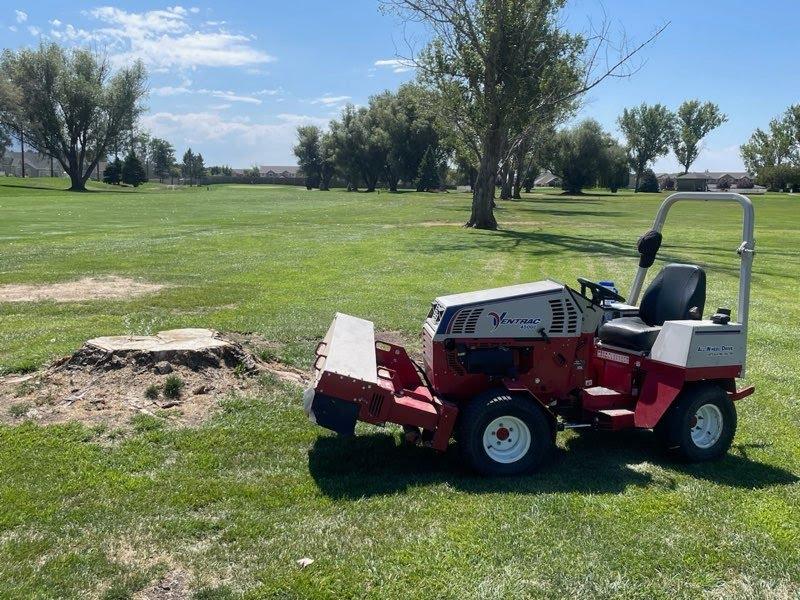
Tree Removal &
Stump Services
Tree Removal, Hazardous Tree Removal, Stump Grinding & Removal, Land Clearing.
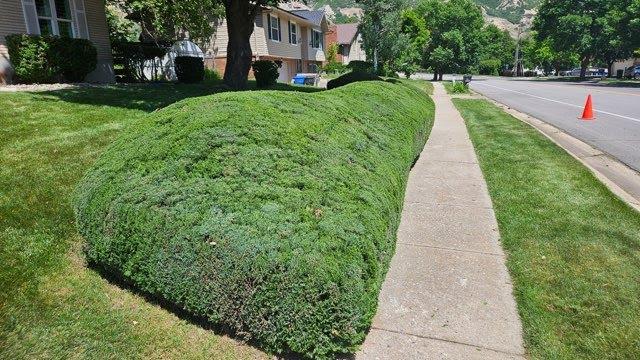
Tree & Shrub Care
Trimming & Pruning, Shrub & Landscape Maintenance, Fertilization, Treatment
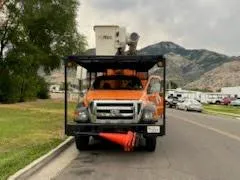
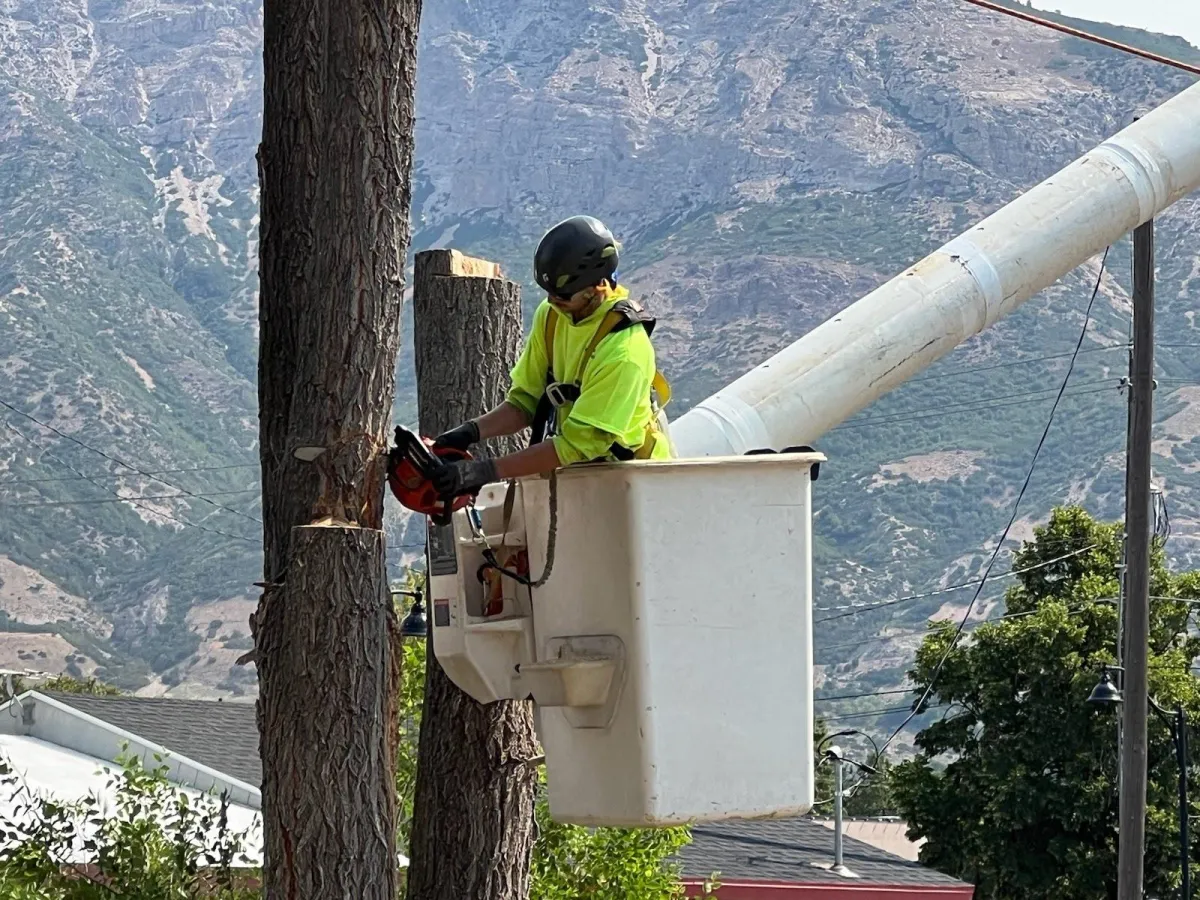
Emergency &
Storm Services
Emergency Tree Services, Storm Damage Response
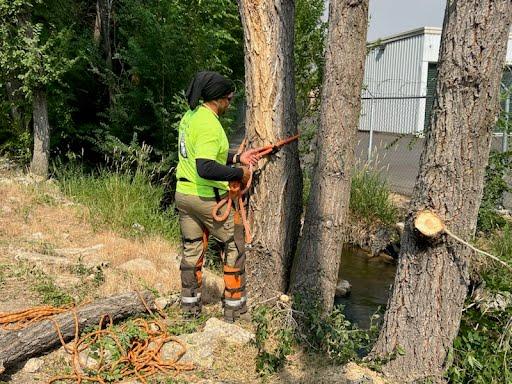
Tree Health & Structural Support
Diagnosis & Risk Management, Cabling, Bracing & Preservation
Why Choose Darrell’s?
Trusted, Local Tree Care Experts
Since 1981
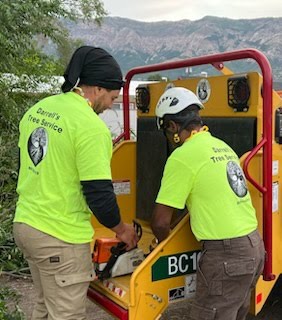
Here's what you get:
Locally Owned & Operated Since 1981
Certified, Experienced Arborists
Free, No-Obligation Estimates
Fully Licensed & Insured
Prompt, Thorough Cleanup, Every Job
4.6-Star Rated by Your Neighbors
Areas We Serve
CLIENT'S REVIEWS
WE HANDLE EVERYTHING FOR YOU
OVER
40
YEARS OF SERVICE
OVER
52,000
TREES TAKEN CARE OF
OVER
30
COMMUNITIES SERVED
Commercial Tree Service
We serve cities, churches, schools, hospitals, property management companies, HOAs, and businesses throughout the region. Our certified arborists and fully insured team deliver professional tree removal, pruning, stump grinding, and root grinding services tailored to meet the unique needs of commercial properties.
Whether you manage a municipal facility, institutional campus, apartment complex, or retail property, we provide reliable, efficient service that protects your investment and maintains your landscape's health and safety. From emergency storm response to routine maintenance, Darrell's Tree Service combines certified expertise with competitive pricing to keep your commercial property looking its best. Contact us today for a free estimate and discover why Weber County, Davis County, Box Elder County, and Salt Lake County trust us leading organizations trust us with their tree care needs.
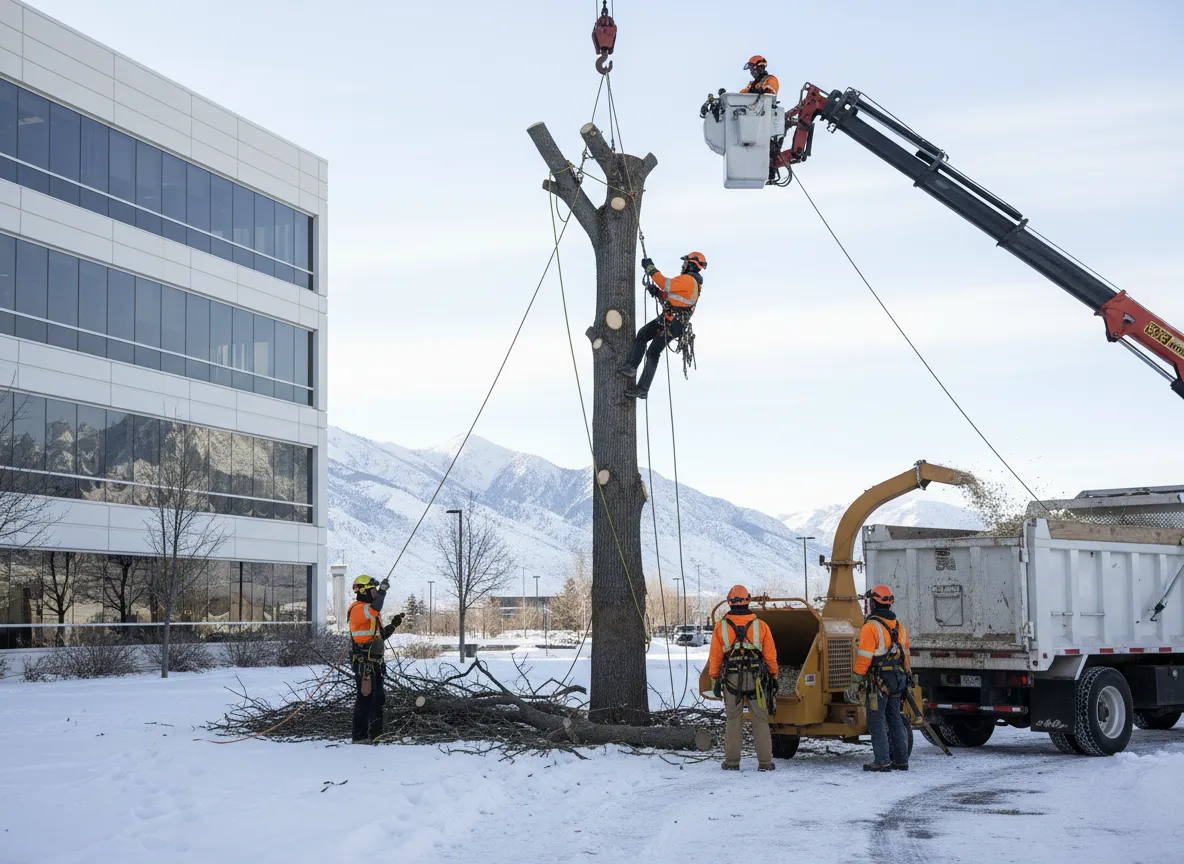
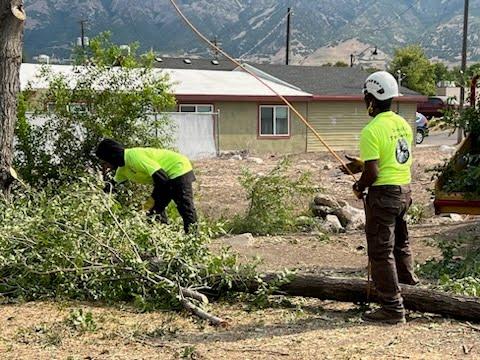
Residential Tree Service
Darrell's Tree Service is the trusted choice for residential tree care throughout Ogden, Layton, Salt Lake City, and surrounding Northern Utah communities. With over 40 years of local expertise, our certified arborists deliver professional tree removal, pruning, stump grinding, and root grinding services designed to protect your home and property. Whether you're dealing with storm damage, overgrown trees threatening your foundation, or routine maintenance to keep your landscape healthy and safe, our fully insured team provides reliable, efficient service at competitive prices.
We understand that your home is your most valuable investment, which is why we treat every residential project with the care and attention it deserves. From emergency 24/7 response to scheduled maintenance, Darrell's Tree Service combines certified expertise with transparent pricing and exceptional customer service. Contact us today for a free estimate and experience why homeowners from as far North as Logan and Tremonton to Salt Lake City and everything in between Northern Utah.
RECENT POSTS

Tree Risk Assessment Cost in Utah: Pricing Factors and What You’re Paying For | Darrell’s Tree Service
If you manage a property in Ogden, Layton, or anywhere along the Wasatch Front, you’ve probably had that moment: a big limb hanging over a parking lot, a leaning cottonwood near a sidewalk, or a mature tree that “just doesn’t look right” after a windstorm. A tree can look fine from the curb and still be one heavy snow away from becoming a real safety and liability problem. That’s where a professional tree risk assessment comes in—and it’s also why people ask us all the time about tree risk assessment cost in Utah.
This guide breaks down what you’re paying for, what impacts pricing, and how to make sure you’re getting a quality assessment (not a quick glance and a guess).
What a tree risk assessment is (in plain English)
A tree risk assessment is a structured evaluation of a tree’s likelihood of failing (breaking, uprooting, or dropping major limbs) and what it could hit if it does. Think of it as a safety check that looks at:
The tree itself: structure, trunk condition, root flare, canopy balance, deadwood, cracks, decay, and past pruning wounds
The site: soil conditions, drainage, irrigation, grade changes, construction damage, and nearby targets
The targets: buildings, vehicles, sidewalks, playgrounds, power lines, patios, and high-traffic areas
For commercial properties, HOAs, churches, and city-managed spaces, this is often about risk management: protecting people, property, and budgets.
Why Utah properties often need assessments (Northern Utah realities)
Northern Utah trees deal with a unique mix of stressors that can increase risk:
Heavy snow loads that split weak branch unions
Strong canyon winds that expose structural defects
Freeze/thaw cycles that widen cracks and stress bark
Summer drought that weakens trees over time
Irrigation patterns (especially in turf-heavy landscapes) that can contribute to shallow roots or root rot
In places like North Ogden, Pleasant View, Harrisville, Riverdale, Roy, Clinton, Clearfield, Sunset, Layton, South Weber, West Haven, Hooper, Farr West, Marriott-Slaterville, and Brigham City, we see the same story: a tree that’s been “fine for years” suddenly fails after one rough season.

Tree risk assessment cost in Utah: what you can expect
Pricing varies because every property and tree is different. Generally, tree risk assessment cost in UT depends on how complex the evaluation needs to be and what documentation you require.
Most property owners are paying for three things:
Expert eyes (training + experience spotting defects that non-arborists miss)
Time on site (inspection, measurements, photos, notes)
Clear recommendations (what to do next, and how urgent it is)
If you need formal documentation for an HOA board, insurance, or municipal file, that adds time and detail—so it affects cost.
The biggest pricing factors (what actually drives the quote)
1) Tree size and complexity
Large, mature trees take longer to evaluate properly. A 20-foot ornamental pear is usually straightforward. A 70-foot cottonwood with multiple leaders over a parking lot? That’s a different level of inspection.
Bigger trees often mean:
More canopy to assess
More potential failure points
Greater consequences if something goes wrong
2) Access and site conditions
Access matters more than people realize. Pricing can change if:
The tree is behind locked gates or inside fenced commercial yards
The ground is steep or uneven
There are obstacles (tight courtyards, landscaping features, traffic)
The tree is near power lines or structures that limit viewing angles
3) Number of trees being assessed
If you’re a property manager or HOA and you need multiple trees evaluated, the per-tree cost often becomes more efficient because travel and setup time is spread out.
If you’re managing a campus (church, school, retail center, office park), we can typically structure the visit so you get a clear, prioritized plan without paying “one-off” pricing for each tree.
4) Documentation needs (verbal guidance vs. written report)
A quality assessment can be:
On-site evaluation with verbal recommendations (great for homeowners or small properties)
Documented findings with photos, risk ratings, and prioritized action steps (common for commercial and HOA needs)
If you need a formal report for records, budgeting, or liability protection, expect the cost to be higher—because the deliverable is more detailed.
5) Urgency and scheduling
After a storm, demand spikes. Emergency or short-notice assessments can cost more because they require schedule reshuffling and rapid turnaround.
If you’re planning ahead (which is ideal), you’ll usually have more flexibility and better pricing.
6) Advanced diagnostics (only when needed)
Most assessments are visual plus basic measurements. But sometimes we recommend additional tools—especially when the risk is high and removal is expensive.
Examples include:
Decay detection tools
Root collar excavation (to check for girdling roots or decay)
Soil and drainage evaluation
Not every tree needs this, and a trustworthy arborist won’t upsell it automatically. The goal is clarity, not complexity.

What a quality tree risk assessment should include
If you’re comparing providers, here’s what you should expect from a professional assessment:
A clear explanation of what we’re seeing (not jargon)
Identification of the most likely failure points (limbs, trunk, roots)
Discussion of targets (what the tree could hit)
Practical recommendations with urgency levels
Options when possible (prune vs. cable/bracing vs. remove)
A plan you can act on—especially if you’re budgeting for a commercial property
If you need ongoing care after the assessment, that’s where services like tree pruning and tree trimming become your risk-reduction tools.
Internal links you may find helpful:
Tree trimming and pruning: https://darrellstreeservices.com/tree-trimming/
Tree removal: https://darrellstreeservices.com/tree-removal/
Emergency tree service: https://darrellstreeservices.com/emergency-tree-service/
Stump grinding: https://darrellstreeservices.com/stump-grinding/
Common scenarios (and what we typically recommend)
Commercial lots and high-traffic areas
If a tree overhangs parking stalls, sidewalks, entrances, or loading zones, we focus heavily on:
Deadwood and weak branch unions
Canopy weight distribution
Signs of decay in trunk/major limbs
Often, strategic pruning reduces risk without removing the tree.
HOAs and multi-family properties
HOAs usually need:
A consistent standard for evaluating multiple trees
Documentation for board decisions
A prioritized list that supports budgeting
A good assessment helps you avoid “panic removals” and instead plan work over time.
Older residential neighborhoods
In established areas around Ogden and Brigham City, we see mature trees with:
Old pruning wounds
Hidden decay
Root issues from decades of irrigation patterns
Homeowners often feel relief after a real assessment because it replaces worry with a clear plan.
How to keep tree risk assessment cost in UT reasonable (without cutting corners)
Bundle assessments if you have multiple trees
Schedule before storm season (late summer/fall planning helps)
Ask for priorities (handle the highest-risk trees first)
Use the assessment to prevent emergencies (emergency removals are almost always more expensive than planned pruning)
A risk assessment is often a cost-saver because it helps you spend money where it actually reduces risk.
What happens after the assessment?
You’ll typically end up in one of these outcomes:
No action needed (best case)
Pruning recommended to reduce weight, remove deadwood, and improve structure
Cabling/bracing for certain structural issues (when appropriate)
Removal recommended if the risk is high and the tree can’t be made reasonably safe
If removal is the right call, we’ll talk through safety, access, and cleanup expectations so you’re not left guessing. (And yes—cleanup matters. A professional job should leave your property looking cared for, not torn up.)
Why businesses choose Darrell’s Tree Service for risk assessments
When you’re responsible for a property, you don’t just need a “tree person.” You need a team that:
Understands liability and public safety
Shows up on time and communicates clearly
Has the equipment and experience to handle what the assessment uncovers
Knows Northern Utah trees, weather, and seasonal stress patterns
Darrell’s Tree Service has been serving Northern Utah since 1981. We’re licensed and insured, and we approach assessments with a safety-first mindset—because the goal isn’t to scare you into work. It’s to give you honest guidance you can trust.
Soft next step: get a clear, professional opinion
If you’re in Northern Utah and you’re wondering what a tree risk assessment cost in Utah would be for your property—commercial or residential—reach out. I’m happy to take a look and give you a straightforward recommendation.
Schedule a consultation here: https://darrellstreeservices.com/appointment
Quick Q&A / FAQs (Tree risk assessment cost in Utah)
How much does a tree risk assessment cost in UT?
It depends on tree size, access, number of trees, and whether you need a written report. A single-tree, straightforward evaluation costs less than a multi-tree commercial assessment with documentation.
Do you provide written reports for HOAs or commercial properties?
Yes. If you need documentation for board meetings, budgeting, insurance, or city records, we can provide a clear written summary with photos and recommendations.
How long does a tree risk assessment take?
A single tree can sometimes be evaluated quickly, but larger or more complex trees—and multi-tree properties—take longer. If documentation is required, add time for write-up.
Can an assessment prevent emergency tree removal?
Often, yes. Identifying structural issues early and addressing them with pruning or support can reduce the chance of storm-related failures.
What’s the difference between a tree risk assessment and a regular estimate?
A regular estimate is usually focused on pricing a specific job (like trimming or removal). A risk assessment is focused on safety and likelihood of failure—then it recommends the right next step.
When is the best time of year to schedule an assessment in Northern Utah?
Anytime you have concerns, but planning ahead of heavy snow and wind seasons is smart. Late summer through fall is a great time to evaluate and reduce risk before winter weather hits.

Serving Ogden and Northern Utah with trusted, certified tree care since 1981.


