BLOG
Tree Root Grinding in Utah: When You Need It, How It Works, and What It Costs | Darrell’s Tree Service
If you manage a property in Ogden, Layton, or anywhere along the Wasatch Front, you’ve probably seen it: a “perfectly fine” tree… and a sidewalk panel that’s suddenly heaving up, cracking, and turning into a trip hazard. In Northern Utah, freeze/thaw cycles, irrigation patterns, and fast-growing shade trees can make surface roots a real problem—especially around walkways, curbs, parking lots, and building entrances. The good news: tree root grinding is often a clean, practical fix when done the right way.
In this guide, I’ll walk you through when tree root grinding in UT makes sense, how the process works, what affects cost, and how a professional crew protects your people, your pavement, and your utilities.
What is tree root grinding?
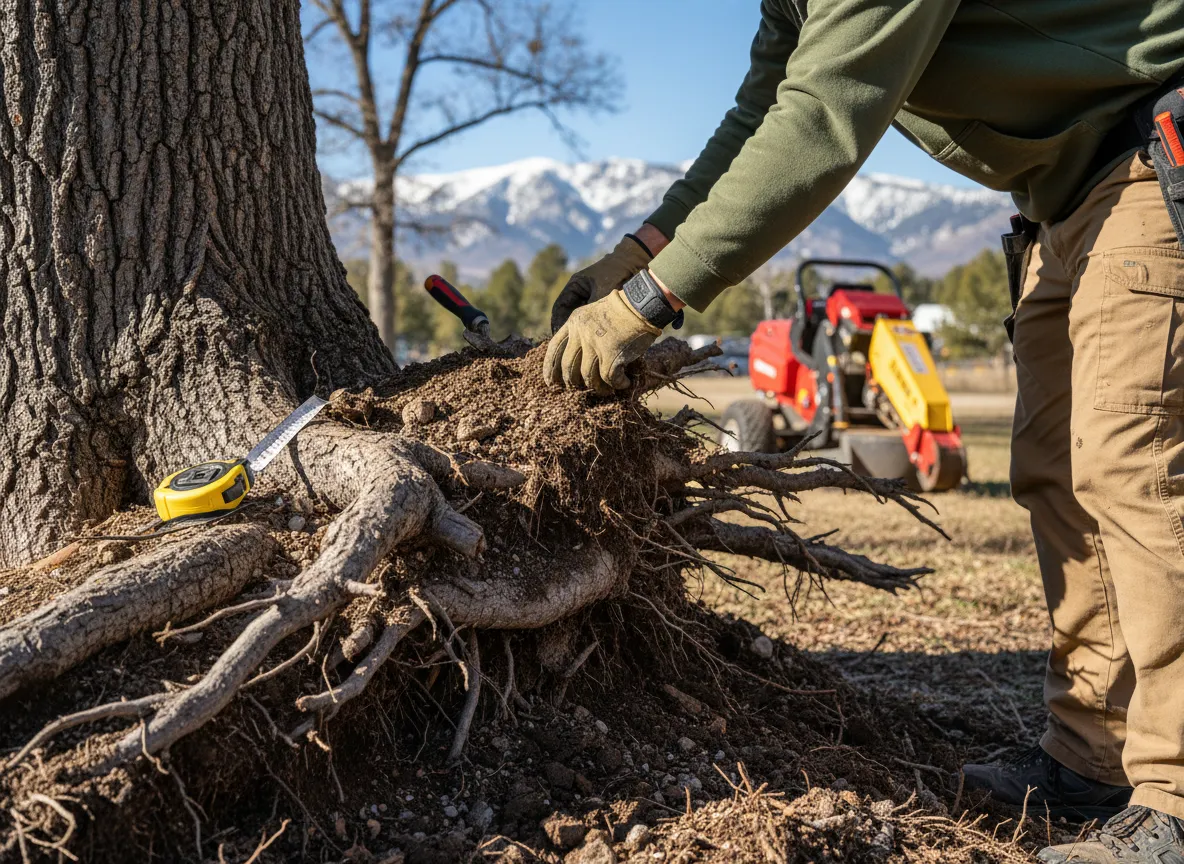
Tree root grinding is a controlled process where a professional uses specialized equipment to grind down surface roots that are causing problems—most commonly lifting concrete, damaging asphalt, interfering with landscaping, or creating mowing obstacles.
It’s not the same as stump grinding (though the equipment and approach are similar). With root grinding, the goal is usually to reduce specific roots near the surface—without destabilizing the tree or creating a bigger issue later.
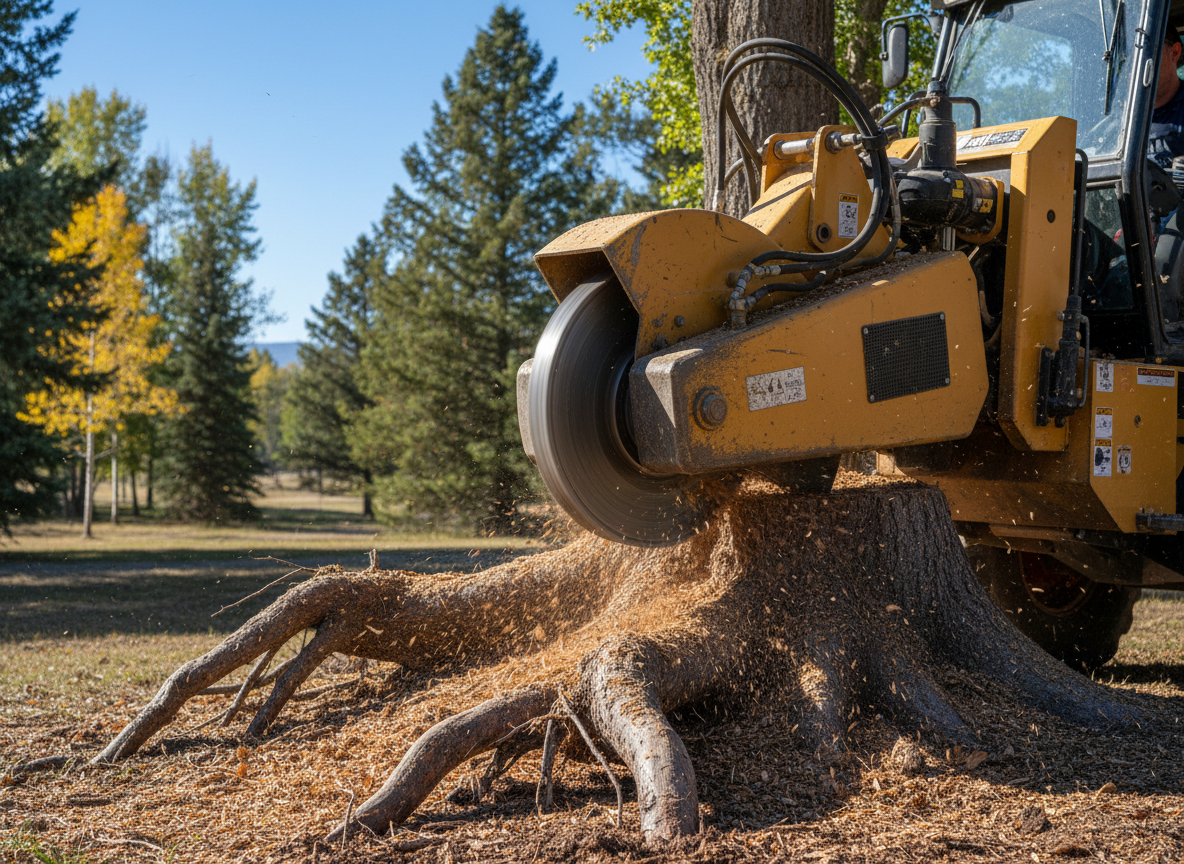
For commercial properties, root grinding is often used to:
- Reduce sidewalk lifting hazards at entrances and along pedestrian routes
- Minimize liability from trips and falls
- Protect irrigation lines and landscape features
- Improve curb appeal without removing a mature tree
When do you need tree root grinding in Utah?
Not every surface root needs to be ground. But there are a few situations where root grinding is the right call—especially for businesses, HOAs, churches, schools, and city properties that need safe, accessible walkways.
1) Sidewalks or walkways are lifting
This is the big one. If a root is pushing up concrete, it’s creating a trip hazard and a potential liability issue. In winter, that risk goes up—ice and snow hide uneven edges, and people don’t see the lift until it’s too late.
If you’re seeing:
- Raised sidewalk panels
- Cracked concrete near tree lines
- Uneven joints at curb ramps
…tree root grinding may be part of the solution.
2) Roots are damaging curbs, asphalt, or parking lot edges
Commercial lots in places like Roy, Riverdale, and Clearfield often have trees planted near parking islands. Over time, roots can push against curbing, break asphalt edges, and create drainage issues.
Root grinding can help reduce pressure in targeted areas—especially when combined with repairs and root management strategies.
3) Roots are interfering with mowing, landscaping, or irrigation
Surface roots can make it hard to maintain turf and can damage mower blades (or just make mowing miserable). They can also create dry spots by competing for water, or disturb irrigation lines as they expand.
4) You’re trying to preserve a mature tree
In Northern Utah, mature trees are valuable. They provide shade, reduce heat around buildings, and improve property value. If the tree is healthy and you want to keep it, root grinding can be a less invasive alternative to removal.
That said: not every tree is a good candidate. A certified arborist’s assessment matters here.
5) You’ve already repaired concrete—and it’s happening again
If you’ve replaced a sidewalk panel once and it’s lifting again, the root issue is still active. Root grinding (done safely and strategically) can reduce repeat damage.
When root grinding is not the right move
This is where a lot of DIY or “quick fix” approaches go wrong.
The tree could become unstable
Roots aren’t just “in the way”—they’re structural. Cutting or grinding the wrong roots can reduce stability, especially in Utah wind events and heavy snow loads.
If a tree is already leaning, has decay, or has a compromised root plate, grinding could increase risk.
You might be better off with pruning, removal, or a different repair plan
Sometimes the best solution is:
- Tree removal (especially if the tree is declining or hazardous)
- Tree trimming/pruning to reduce canopy weight and wind load
- Stump grinding/removal if the tree is already gone
- Concrete repair options (like shaving, ramping, or replacement) paired with root management
If you’re not sure, it’s worth getting a professional opinion before you commit.
You can explore related services here:
- Tree removal: https://darrellstreeservices.com/tree-removal/
- Tree trimming/pruning: https://darrellstreeservices.com/tree-trimming/
- Stump grinding/removal: https://darrellstreeservices.com/stump-grinding/
How tree root grinding works (step-by-step)
A professional root grinding job should be planned—not rushed. Here’s what the process typically looks like for tree root grinding in Utah.
Step 1: Site walk + risk check
For commercial properties, we look at pedestrian traffic, ADA considerations, and where the hazard is most likely to cause an incident (entrances, ramps, corners, and high-footfall walkways).
We also check:
- Tree species and health
- Root flare and visible structural roots
- Soil conditions (common in Northern Utah: compacted soils, clay pockets, and irrigation patterns)
- Nearby utilities and irrigation
Step 2: Utility locating and protection
Before grinding, we identify what’s in the ground. Gas, power, communications, sprinkler lines—this is where “just grind it down” becomes risky.
A professional crew will plan around utilities and protect surrounding landscaping.
Step 3: Controlled grinding
Using a grinder, we carefully reduce the problem root(s) to the depth needed—usually just enough to relieve pressure or allow for a safe repair.
The goal is targeted work, not aggressive removal.
Step 4: Cleanup and site restoration
Grinding creates chips and soil disturbance. A good job includes cleanup and a plan for restoring grade so water doesn’t pool against sidewalks or foundations.
Step 5: Recommendations to prevent repeat issues
This is the part that saves you money long-term. Depending on the situation, we may recommend:
- Adjusting irrigation
- Adding mulch rings (done correctly, not piled against the trunk)
- Root barrier options (in some cases)
- Coordinating with your concrete contractor for the best repair approach
Common trees in Northern Utah that cause surface root problems
A lot of surface root issues come down to tree species + site conditions.
Along the Wasatch Front, we commonly see root-related sidewalk lifting with:
- Silver maple and other fast-growing maples
- Poplars/cottonwoods (aggressive roots, high water demand)
- Some ash varieties
- Mature ornamental trees planted too close to hardscape
Even “good” trees can create issues when they’re boxed into small planters or planted too close to sidewalks.
Tree root grinding vs. root cutting vs. stump grinding
These terms get mixed up a lot. Here’s the simple breakdown:
- Tree root grinding: Targeted grinding of surface roots that are causing damage or hazards.
- Root cutting: Cutting roots (often with saws) to remove or sever them. This can be riskier for tree stability if not planned carefully.
- Stump grinding: Grinding the stump after a tree is removed. Often includes grinding some roots near the stump, but not typically extended surface root management.
If you’re dealing with a leftover stump or visible roots after removal, stump grinding may be the right service:
What does tree root grinding cost in Utah?
Cost is one of the first questions property managers ask—and it’s a fair one. The honest answer: tree root grinding cost depends on access, root size, how much grinding is needed, and what needs to be protected.
Here are the biggest factors that affect pricing for tree root grinding in UT:
1) Size and number of roots
A single surface root lifting one panel is very different than a network of roots running along a 30-foot stretch of sidewalk.
2) Access and equipment needs
Can we get equipment close to the work area? Tight courtyards, fenced areas, steep slopes, or delicate landscaping can increase labor and time.
3) Proximity to utilities and irrigation
Working near sprinkler manifolds, shallow lines, or utility corridors requires more planning and slower, more careful work.
4) Cleanup and restoration expectations
Commercial properties often need a higher standard of finish—clean edges, restored grade, and minimal disruption.
5) Coordination with concrete repair
Root grinding is often step one. If you’re also repairing sidewalk panels, curbs, or asphalt, we can coordinate timing so the site stays safe and the repair lasts.
If you want a real number for your property, the fastest way is a quick on-site look. We’ll give you a clear plan and a straightforward estimate.

Safety and liability: why commercial properties shouldn’t DIY this
I get it—when you see one root lifting a sidewalk, it’s tempting to think it’s a quick weekend fix.
But for businesses, HOAs, and public-facing properties, there are real risks:
- Trip hazards during the work (especially if the area isn’t properly blocked off)
- Utility damage (expensive and dangerous)
- Tree instability if structural roots are compromised
- Repeat damage if the underlying cause isn’t addressed
A professional approach is about more than grinding—it’s about protecting people and preventing the problem from coming right back.
How to reduce future surface root problems
You can’t “train” roots to behave perfectly, but you can reduce the chances of repeat lifting.
Improve watering habits
Frequent shallow watering encourages shallow roots. In many Northern Utah landscapes, irrigation schedules unintentionally keep roots near the surface.
A better approach is deeper, less frequent watering (when appropriate for the plantings) so roots are encouraged to grow down.
Keep mulch correct (not piled)
Mulch is great—when it’s done right. A clean mulch ring can reduce mower damage and help soil moisture. But avoid “volcano mulching” against the trunk.
Plan tree placement for new installs
If you’re planting new trees on a commercial site, spacing matters. Planting too close to sidewalks or curbs almost guarantees future root conflict.
Use an arborist’s perspective
A certified arborist can help you balance safety, tree health, and long-term maintenance costs—especially when you’re managing multiple properties.
Why Darrell’s Tree Service is the safe choice for root grinding
When you’re dealing with roots near sidewalks, entrances, and utilities, you want a team that’s careful, experienced, and properly insured.
Darrell’s Tree Service has been serving Northern Utah since 1981. We bring a safety-first mindset to every job, and we don’t recommend “quick fixes” that create bigger problems next season.
Whether you manage a church property in Brigham City, an HOA in Pleasant View, a retail center in Riverdale, or a home in North Ogden, we’ll help you make the right call for your trees and your site.
Quick FAQs about tree root grinding in UT
Will root grinding kill my tree?
Not necessarily. Targeted grinding can be done without major harm, but it depends on which roots are involved and the tree’s health. That’s why an assessment matters.
How long does it take?
Many jobs can be completed in a single visit, but larger commercial sites or long stretches of sidewalk may take longer.
Will the roots grow back?
Roots can continue to grow. The goal is to manage the conflict and reduce repeat damage, often paired with better irrigation and repair planning.
Can you grind roots near a building foundation?
Sometimes, yes—but it requires careful planning. We’ll look at grade, drainage, and what the tree is doing structurally before recommending a plan.
Ready to make your sidewalks safer?
If you’re dealing with a lifting sidewalk, cracked concrete, or surface roots creating a hazard on your property, let’s take a look. We’ll give you an honest recommendation and a clear estimate—no pressure.
Schedule a consultation here: https://darrellstreeservices.com/appointment
Darrell’s Tree Service proudly serves Northern Utah, including Ogden, North Ogden, Pleasant View, Harrisville, Riverdale, Roy, Clinton, Clearfield, Sunset, Layton, South Weber, West Haven, Hooper, Farr West, Marriott-Slaterville, and Brigham City.

Serving Ogden and Northern Utah with trusted, certified tree care since 1981.


