Darrell’s Tree Service
Trusted Residential and Commercial Tree Service for Northern Utah
Serving Ogden & The Wasatch Front Since 1981
Healthy Trees.
Happy Propertys.
Peace of Mind.
For over 40 years, Darrell’s Tree Service has been Northern Utah’s go-to team for expert tree care, removal, and landscape solutions. Our certified arborists combine deep local knowledge with professional training to keep your property safe, beautiful, and thriving, season after season.
Our Services
OUR SERVICES
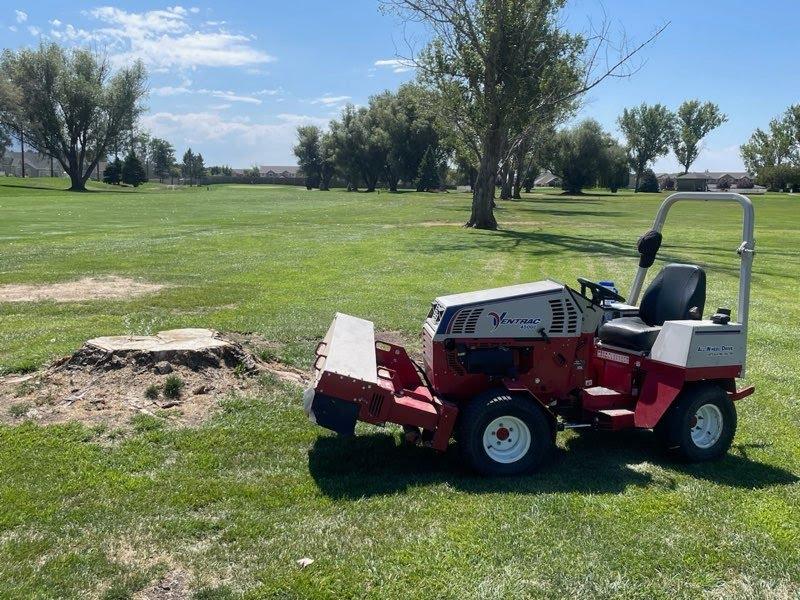
Tree Removal &
Stump Services
Tree Removal, Hazardous Tree Removal, Stump Grinding & Removal, Land Clearing.
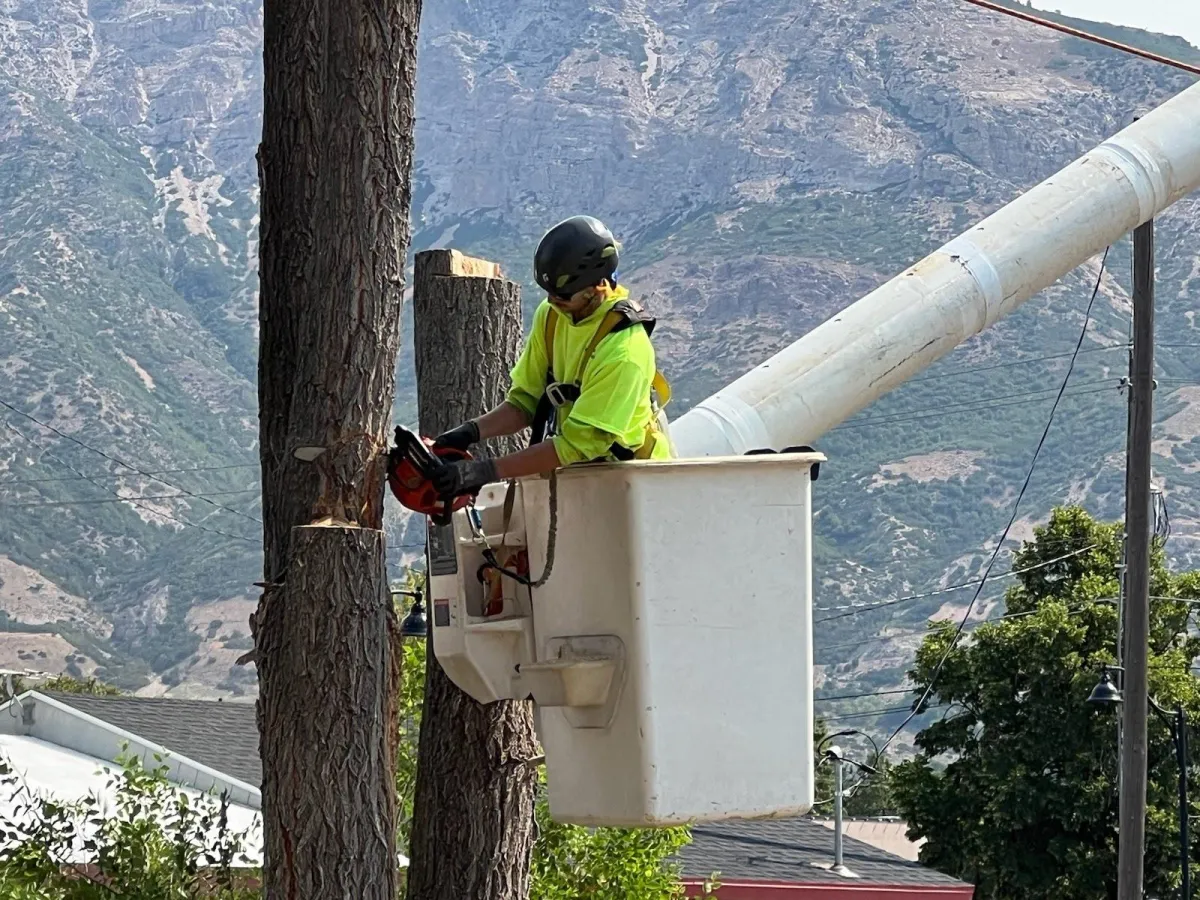
Tree & Shrub Care
Trimming & Pruning, Shrub & Landscape Maintenance, Fertilization, Treatment
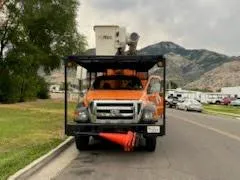
Emergency &
Storm Services
Emergency Tree Services, Storm Damage Response
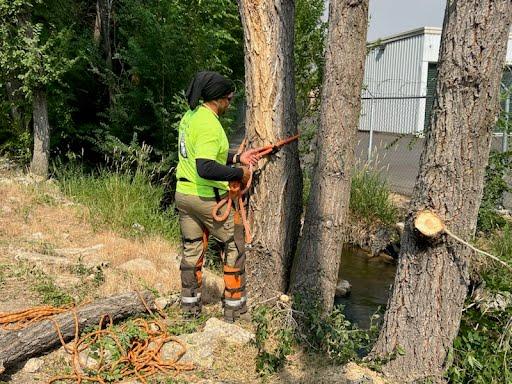
Tree Health & Structural Support
Diagnosis & Risk Management, Cabling, Bracing & Preservation
Why Choose Darrell’s?
Trusted, Local Tree Care Experts
Since 1981
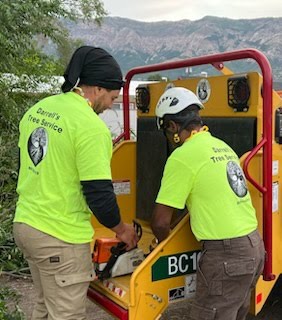
Here's what you get:
Locally Owned & Operated Since 1981
Certified, Experienced Arborists
Free, No-Obligation Estimates
Fully Licensed & Insured
Prompt, Thorough Cleanup, Every Job
4.6-Star Rated by Your Neighbors
Areas We Serve
CLIENT'S REVIEWS
WE HANDLE EVERYTHING FOR YOU
OVER
40
YEARS OF SERVICE
OVER
52,000
TREES TAKEN CARE OF
OVER
30
COMMUNITIES SERVED
Commercial Tree Service
We serve cities, churches, schools, hospitals, property management companies, HOAs, and businesses throughout the region. Our certified arborists and fully insured team deliver professional tree removal, pruning, stump grinding, and root grinding services tailored to meet the unique needs of commercial properties.
Whether you manage a municipal facility, institutional campus, apartment complex, or retail property, we provide reliable, efficient service that protects your investment and maintains your landscape's health and safety. From emergency storm response to routine maintenance, Darrell's Tree Service combines certified expertise with competitive pricing to keep your commercial property looking its best. Contact us today for a free estimate and discover why Weber County, Davis County, Box Elder County, and Salt Lake County trust us leading organizations trust us with their tree care needs.
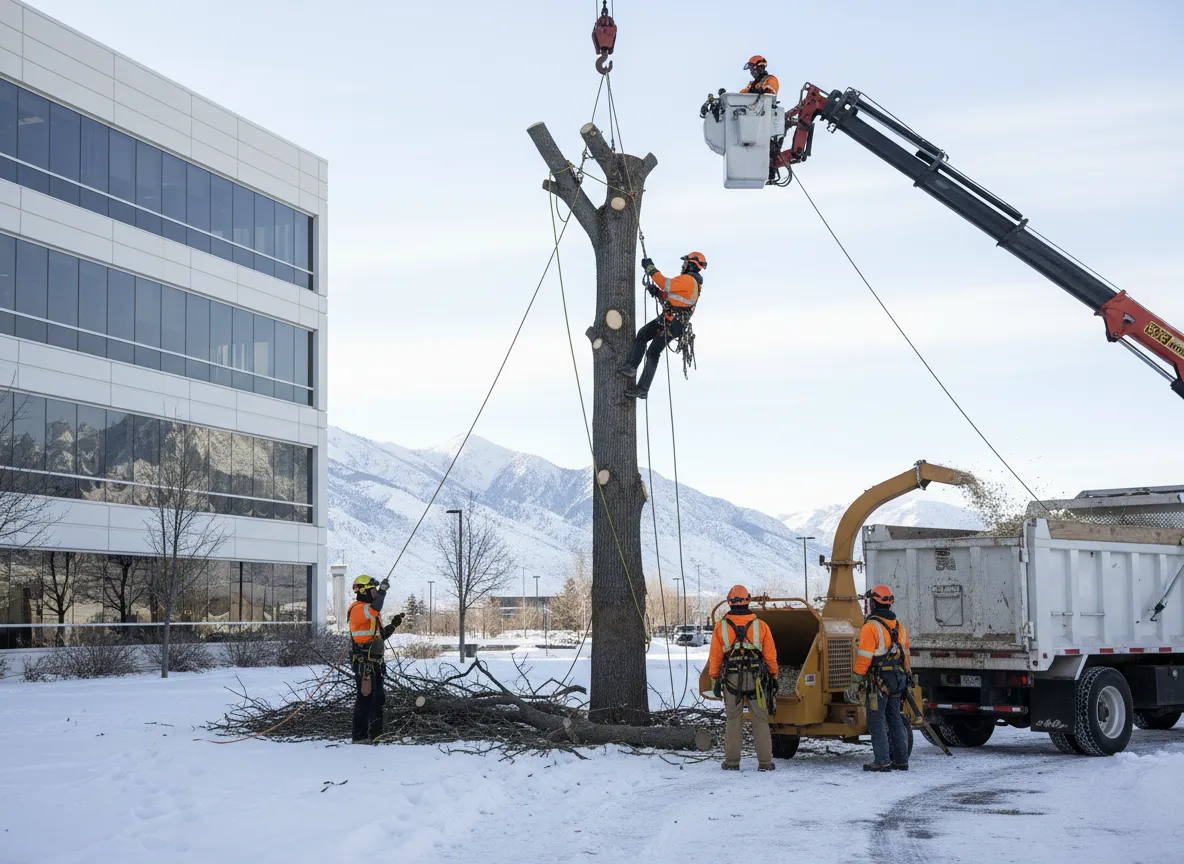
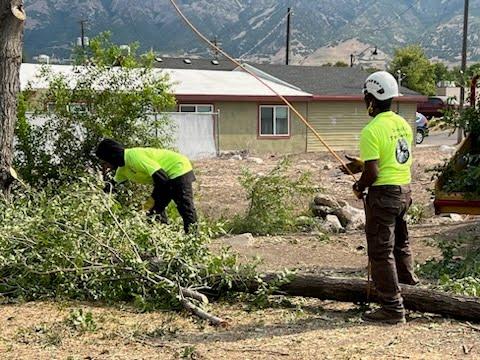
Residential Tree Service
Darrell's Tree Service is the trusted choice for residential tree care throughout Ogden, Layton, Salt Lake City, and surrounding Northern Utah communities. With over 40 years of local expertise, our certified arborists deliver professional tree removal, pruning, stump grinding, and root grinding services designed to protect your home and property. Whether you're dealing with storm damage, overgrown trees threatening your foundation, or routine maintenance to keep your landscape healthy and safe, our fully insured team provides reliable, efficient service at competitive prices.
We understand that your home is your most valuable investment, which is why we treat every residential project with the care and attention it deserves. From emergency 24/7 response to scheduled maintenance, Darrell's Tree Service combines certified expertise with transparent pricing and exceptional customer service. Contact us today for a free estimate and experience why homeowners from as far North as Logan and Tremonton to Salt Lake City and everything in between Northern Utah.
RECENT POSTS
Tree Felling Cost in Layton, UT | Get a Quote
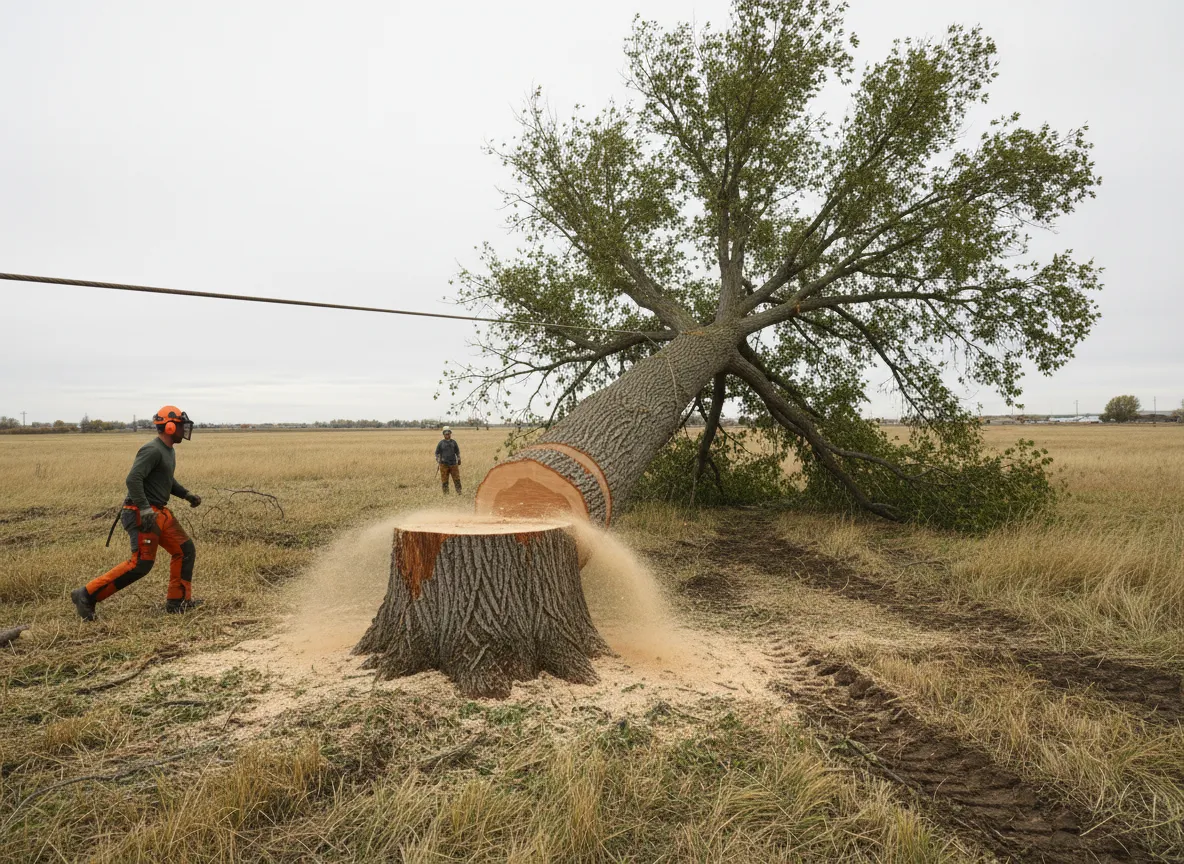
Need tree felling in Layton, UT? I get it—when you’re responsible for a property (or a whole portfolio), the last thing you want is a leaning tree, a surprise storm, and a “we’ll figure it out later” plan. In Northern Utah, wind, heavy snow loads, and freeze/thaw cycles can turn a manageable tree into a real liability fast. The good news: tree felling doesn’t have to feel risky or mysterious when you know what drives the price and what a safe plan looks like.
What “tree felling” means (and how it’s different from “tree removal”)
When people search tree felling in Layton UT, they’re usually talking about taking a tree down safely—either in one controlled direction (a traditional fell) or in sections when space is tight.
Here’s the simple breakdown:
Tree felling: Cutting a tree so it falls in a controlled direction. Works best when there’s room to drop it safely.
Sectional removal: Taking a tree down piece-by-piece (often with ropes or a lift). This is common in neighborhoods, near buildings, or around power lines.
Full tree removal: The broader service that can include felling/sectional removal, hauling, and sometimes stump work.
If you’re comparing bids, it helps to ask how the tree will come down. The method affects cost, timeline, and risk.
Tree felling cost in Layton, Utah: what actually affects the price
If you’re looking for tree felling cost Layton Utah, you’ll see wide ranges online—and that’s because the “real” price depends on the tree and the site.
When I price a job, I’m mainly looking at height, hazards, equipment access, and cleanup—because those four factors determine labor, time, and safety controls.
1) Tree height and diameter
Bigger trees typically mean:
More time to cut and control
More weight and force to manage
More debris to haul
A 20–30 foot ornamental tree is a different job than a mature cottonwood or pine that’s towering over a parking lot.
2) Hazards (structures, power lines, traffic, and people)
This is the biggest “cost swing” factor.
In Layton, a lot of commercial and residential properties have trees close to:
Roofs, fences, sheds, and garages
Power lines (especially along streets and older neighborhoods)
Drive lanes, sidewalks, and parking stalls
Play areas (churches, schools, parks)
If the tree can’t be safely dropped in one direction, we may need sectional removal, rigging, or a lift. That’s not “upselling”—it’s what keeps your property (and the public) protected.
3) Equipment access (the hidden factor most people miss)
Access is huge for tree felling in Layton UT.
Questions I’m thinking about right away:
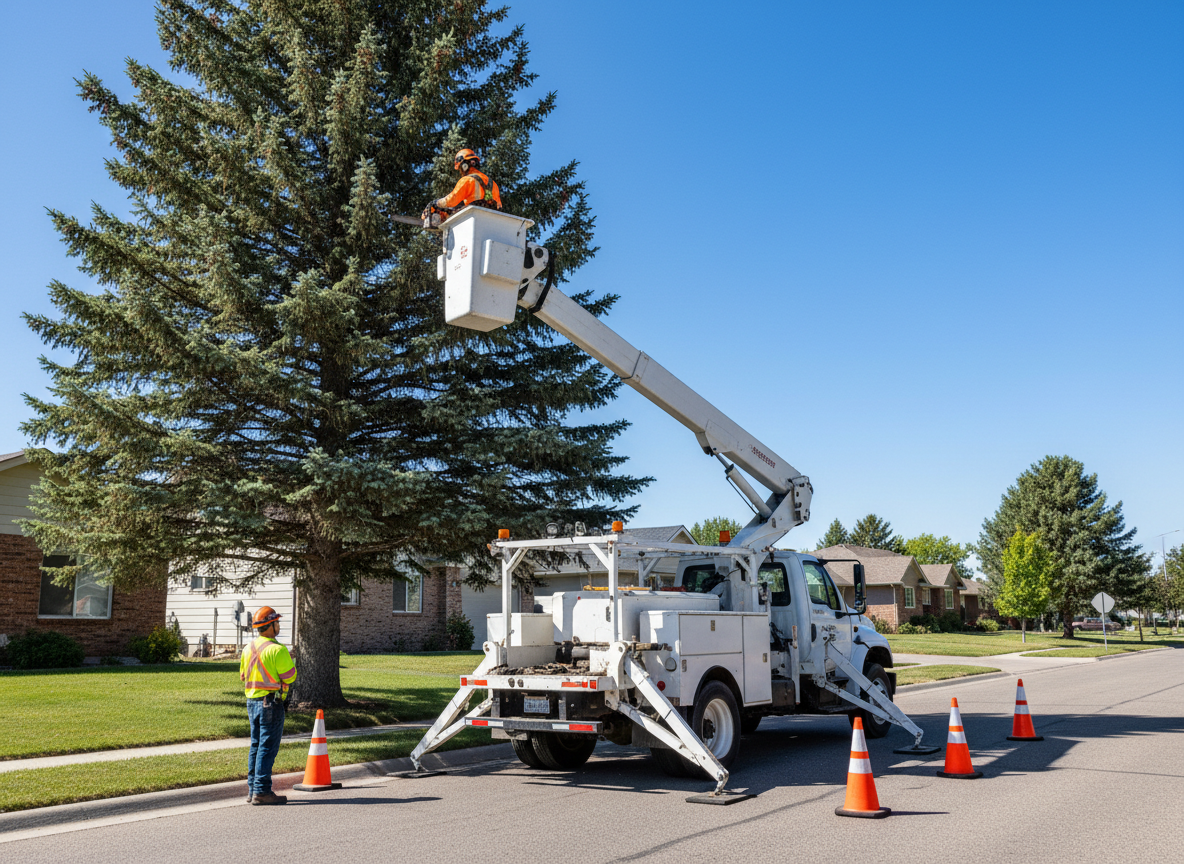
Can a bucket truck or lift reach the tree?
Is there a gate width issue?
Is the tree in a backyard with tight turns?
Is the ground soft, sloped, or landscaped?
Are there irrigation lines, decorative rock, or fragile hardscapes?
If access is limited, the crew has to do more by hand and move debris farther—more labor, more time.
4) Cleanup and hauling (what “done” actually means)
Cleanup is where you can get surprised if it’s not spelled out.
A clear estimate should specify:
Are branches and logs hauled away?
Is the site raked/blown clean?
Are wood chips included or removed?
Are we cutting logs into manageable lengths for you?
For commercial properties, cleanup matters even more because you’re thinking about:
Tenant experience
Safety and trip hazards
Parking availability
Keeping the site professional
I’m a big believer that a job isn’t finished until the property looks like we were never there—except for the problem tree being gone.
5) Tree species and wood density
Northern Utah has a mix of species that behave differently when cut and rigged.
Cottonwoods can be massive and brittle.
Siberian elms often have unpredictable limb structure.
Pines and spruces can hold heavy snow loads and have tall, narrow profiles.
Species affects how we plan the drop zone, how we rig, and how long the job takes.
6) Condition of the tree (dead, storm-damaged, or compromised)
Dead or damaged trees can be more dangerous because:
Limbs may break unexpectedly
The trunk can be hollow or weakened
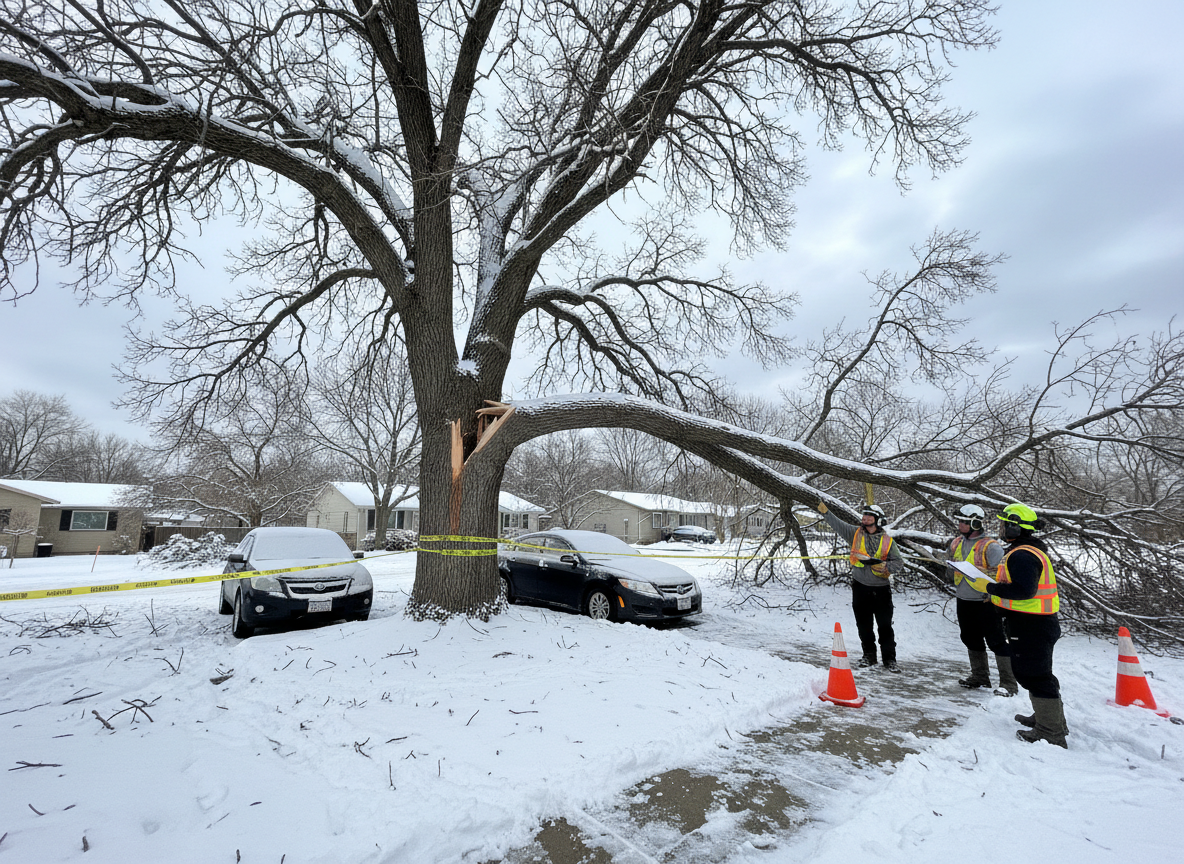
The tree may be under tension from wind or snow load
If you’re dealing with storm damage, you may also need a faster response window—which can affect scheduling.
Typical price ranges (and why I prefer on-site estimates)
I’m careful with “internet pricing” because it can mislead you. But to help you plan, here’s a practical way to think about it:
Small trees (roughly 15–30 ft, easy access, minimal hazards): often the most straightforward pricing.
Medium trees (30–60 ft, moderate hazards/access): costs increase as rigging and crew time increase.
Large trees (60+ ft, tight quarters, near structures/lines): typically the highest range due to complexity and safety controls.
The most accurate way to get a number you can trust is to have me look at the tree and the site. That’s how I can give you a clear estimate based on the real variables—height, hazards, equipment access, and cleanup.
If you want a fast next step, you can request a quote here: https://darrellstreeservices.com/appointment
Commercial properties in Layton: what I look for (and what you should ask)
If you manage a business property, HOA, church, school, or municipal site, the “cost” conversation is really about risk management.
Here are the questions I recommend asking any tree company:
Are you licensed and insured? (Ask for proof.)
How will you protect pedestrians and vehicles?
Will you need traffic control or cones?
What’s your plan for power lines? (This matters.)
What does cleanup include—exactly?
How do you handle scheduling around business hours?
A professional plan should feel calm and methodical—not rushed.
Timing: when to schedule tree felling in Layton, UT
Northern Utah weather is a real factor.
Winter: Snow and frozen ground can change access and safety conditions.
Spring: Wind events and saturated soil can increase risk.
Summer: Drought stress can weaken trees and increase limb drop.
Fall: A great time to address hazards before snow load season.
If you’re seeing cracks, leaning, dead limbs, or root heaving—don’t wait for the next storm. It’s almost always cheaper (and safer) to handle it on your schedule.
How I build a clear estimate (so you’re not guessing)
When you reach out for tree felling in Layton UT, I’m not trying to “sell” you on the biggest job. I’m trying to give you a plan that makes sense.
A good estimate should include:
The removal method (felling vs. sectional removal)
What equipment will be used (as needed)
What areas will be protected (structures, landscaping, access points)
Exactly what cleanup and hauling includes
Whether stump grinding is included or separate
If you also need related services, it can be helpful to bundle them:
Tree removal: https://darrellstreeservices.com/tree-removal/
Stump grinding: https://darrellstreeservices.com/stump-grinding/
Emergency tree service: https://darrellstreeservices.com/emergency-tree-service/
Tree trimming/pruning: https://darrellstreeservices.com/tree-trimming/
(If any of those URLs differ on the site, tell me what your exact service page links are and I’ll swap them in.)
What can go wrong with “cheap” tree felling
I’m all for fair pricing. But when a quote is dramatically lower than the rest, it’s worth slowing down.
Common issues I see after the fact:
No real plan for hazards (especially near roofs and lines)
Property damage (fences, sprinklers, concrete, landscaping)
Incomplete cleanup
Unsafe cuts that create barber-chair splits (dangerous trunk failures)
Liability exposure for commercial properties
Tree work is one of those trades where safety isn’t a “nice-to-have.” It’s the whole job.
A simple checklist before you request a quote
If you want the fastest, cleanest estimate, here’s what helps:
Tree location (front yard, backyard, parking lot edge, etc.)
Approximate height (one-story, two-story, taller than the building)
Nearby hazards (lines, roofs, fences, traffic)
Access notes (gate width, tight driveway, soft ground)
Your preference on debris (haul away vs. keep firewood)
Even a couple photos can speed things up.
Soft next step: get a quote you can trust
If you’re in Layton or anywhere in Northern Utah and you want a straight answer on tree felling cost Layton Utah, I’m happy to take a look and give you a clear estimate based on the real factors—height, hazards, equipment access, and cleanup.
Request an appointment here: https://darrellstreeservices.com/appointment
FAQs: Tree felling in Layton, UT
How much does tree felling cost in Layton, Utah?
It depends on the tree and the site—especially height, hazards (structures/lines), equipment access, and cleanup/hauling. The quickest way to get an accurate number is an on-site estimate.
Is tree felling the same as tree removal?
Tree felling is one method of taking a tree down (dropping it in a controlled direction). Tree removal can include felling or sectional removal, plus hauling and cleanup.
How long does tree felling take?
Small, straightforward trees can sometimes be handled quickly, while larger or hazard-heavy trees may take longer due to rigging, equipment setup, and cleanup. I’ll give you a realistic timeframe with the estimate.
Can you fell a tree close to a building or power lines?
Sometimes—but often the safer approach is sectional removal with controlled rigging or lift access. If power lines are involved, the plan has to be especially careful.
Do you haul away the wood and branches?
That depends on what you want and what’s included in the estimate. I’ll spell out exactly what cleanup includes so there are no surprises.
Should I remove a tree before winter?
If a tree has dead limbs, cracks, or a lean, it’s smart to address it before heavy snow and wind season. Northern Utah storms can turn a borderline tree into an emergency.

Serving Ogden and Northern Utah with trusted, certified tree care since 1981.


